
The skin colour of a newborn (eyes included) may appear yellowish after birth. This yellowish appearance is called jaundice, which occurs in approximately sixty percent of full-term babies and 80% of premature babies.
In most cases, it’s a temporary, harmless part of your baby adjusting to life outside the womb. Jaundice, however, is not solely a matter of appearance and some cases of jaundice are serious enough to require immediate medical attention.
It is therefore important for parents to pay close attention to when symptoms begin and seek immediate newborn jaundice treatment if there are concerning symptoms.
For example, there is a significant difference between a baby who develops mild yellowing around day three and a baby whose skin turns yellow within the first twenty-four hours of birth. Many times, it is difficult for parents to distinguish between the two scenarios because the differences can be minimal; especially in low lighting conditions or if the baby has darker skin.
👉 Dr. Saba Ekta, consultant pediatrician and neonatologist at Dr. A. Barkat Multispecialty Hospital evaluates and treats babies with newborn jaundice. She also provides information regarding what signs and symptoms indicate a trip to the hospital versus additional days of observation. The purpose of this blog is to provide a step-by-step approach to help new parents determine whether their child’s jaundice requires a visit to the emergency room or simply continued observation under the care of a pediatrician.
>> Book emergency pediatric care today for newborn jaundice treatment in Gaya if your baby is showing any signs of jaundice. Early evaluation is always safer than waiting.
Understanding the Causes of Newborn Jaundice First
Neonatal jaundice takes place as a result of baby’s underdeveloped liver being incapable of clearing bilirubin, a yellow substance that results from the breaking down of red blood cells, fast enough.
In fact, it is very natural that in the beginning the newborn shows jaundice like appearance since he/she is born with more red blood cells that, of course, will not be the case later.
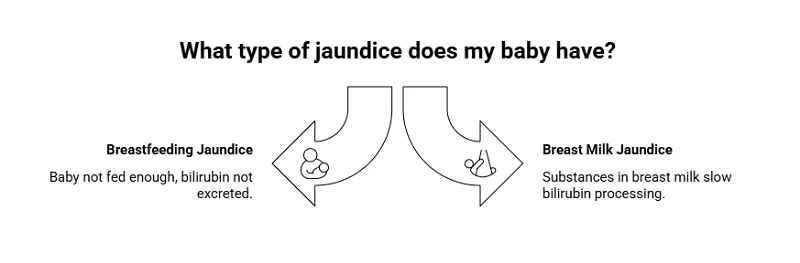
Besides this, there is an understanding of two main types of jaundice that you will come across.
Breastfeeding jaundice is a situation where the baby has not been fed enough and therefore the bilirubin does not get excreted through the stools. Meanwhile breast milk jaundice, is a type where the substances in the breast milk slow down the processing of bilirubin and it may remain present for weeks without being harmful.
If you get to find out what the cause was, you can know more about what to do next. To know if your baby’s jaundice is normal or is turning into concerning territory, we have provided the signs below.
Normal vs Concerning Jaundice – Signs to Watch
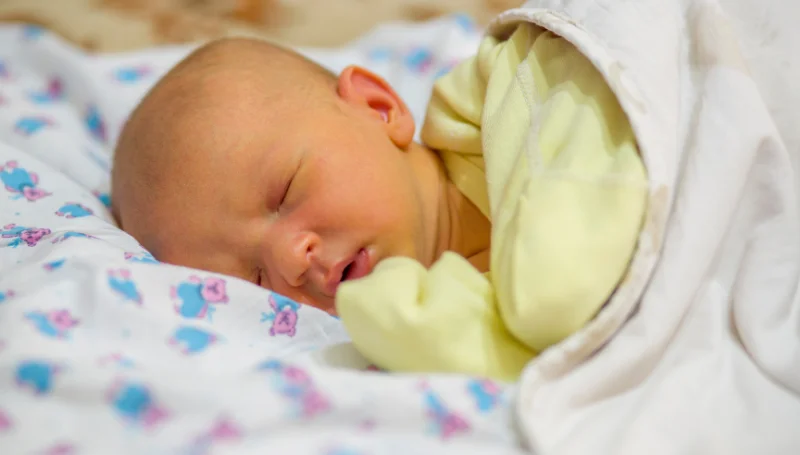
Not all jaundice looks the same, and the difference often comes down to timing and spread. Here’s what separates a routine case from one that needs quick attention.
Normal Jaundice Signs
- Yellowing appears on day 2 or 3 after birth, not before
- Starts at the face and chest, without spreading much further
- Fades gradually on its own by day 10-14
- Baby continues feeding well and stays active
- Weight gain and wet diapers remain normal
Warning Signs Needing Urgent Care
- Jaundice appearing within the first 24 hours of birth
- Yellowing that spreads to the arms, legs, or soles of the feet
- Baby feeds poorly or seems unusually sleepy or difficult to wake
- High-pitched or unusual crying
- Jaundice that lasts beyond three weeks
- Pale stools or dark urine
If you notice any of these, child specialist for jaundice in Gaya consultation should happen without delay, don’t wait it out at home.
>> Book a consultation the same day these signs appear.

Once you’ve spotted a possible warning sign, the next step is getting an accurate diagnosis rather than guessing based on appearance alone.
How Newborn Jaundice Is Diagnosed?
Skin colour alone isn’t reliable for judging severity, especially in babies with darker skin tones. A transcutaneous bilirubinometer – a painless device placed on the skin – gives a quick reading, and if levels look borderline or high, a blood test confirms the exact bilirubin levels in newborns.
Your pediatrician for newborn jaundice in Gaya will also plot the reading against your baby’s age in hours, since the same bilirubin number can mean different things depending on how old your baby is. This is why home judgment isn’t enough; proper testing removes the guesswork entirely.
With a clear diagnosis in hand, treatment decisions become straightforward and are based on established medical thresholds, not assumptions.
Newborn Jaundice Treatment in Gaya
Treatment is dependent completely on how high bilirubin is, how fast it is getting high, and how old in hours is your baby. Neonatal care and disease management at Dr. A Barkat Multispeciality Hospital is based on these three factors and not a one-size-fits-all approach treatment.
Phototherapy – The First Line of Treatment
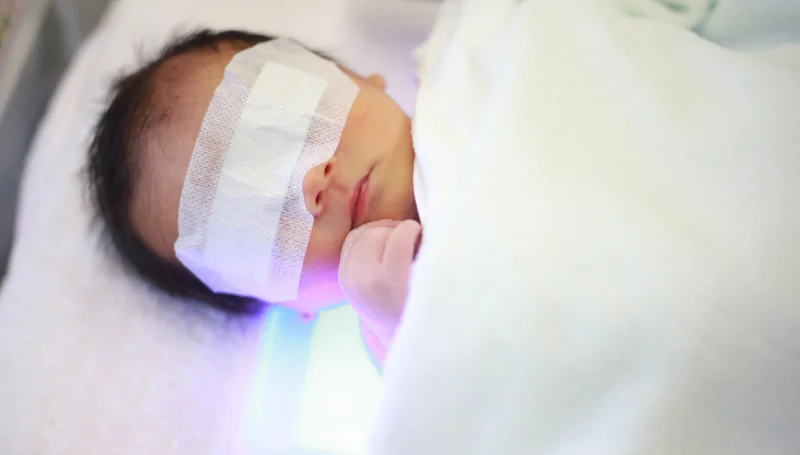
Phototherapy for jaundice is usually the first step for treating most babies. The skin is exposed to special blue lights which breaks down bilirubin in the skin and allows it to be excreted through urine and stool, after the light exposure. Key points about phototherapy:
- Sessions typically run for 24 to 48 hours depending on bilirubin levels
- Your baby’s eyes are protected with soft shields during treatment
- Regular blood checks track how quickly bilirubin is dropping
- Feeding continues normally throughout the sessions
- Most babies respond well and are discharged once levels stabilize
Exchange Transfusion – For Severe Cases
At times where bilirubin reaches dangerous levels despite phototherapy, an exchange transfusion can be used as a life-saving measure.
It slowly replaces the baby’s blood with donor blood and therefore, a quick removal of bilirubin with the least complications is ensured. It’s performed only under close monitoring and is reserved for the most severe, fast-rising cases.
NICU-Level Monitoring When Needed
Some babies, particularly those born premature or with very high bilirubin levels, need closer observation than a standard nursery can provide. Our NICU care in Gaya unit offers:
- Continuous monitoring of bilirubin trends
- Temperature and feeding support alongside phototherapy
- Immediate escalation to exchange transfusion if required
- Round-the-clock nursing supervision
At Dr. A Barkat Multispeciality Hospital, neonatal care in Gaya includes this fully equipped NICU setup under the supervision of Dr. Saba Ekta, a Life Member of the National Neonatology Forum. This is what makes it popular amongst those searching for newborn jaundice treatment near me or newborn jaundice treatment in hospital settings rather than home management alone.
👉 If you are not sure which of the treatments you are eligible to for your baby, then just visit the hospital and get a same-day bilirubin test done.
While undergoing the treatment, the doctor will take care of the medical side of the problem, and you will find that quite a lot can be done on the homefront too to support the recovery as well as catch changes early.
Home Care Tips While Monitoring Jaundice
Simple daily habits can make a real difference in how quickly your baby’s bilirubin levels come down:
- Feed every 2-3 hours – frequent feeding helps flush bilirubin out through bowel movements and is often the single most effective home measure
- Track wet and dirty diapers as a rough indicator of adequate feeding
- Keep follow-up appointments even if yellowing seems to be fading, since your baby jaundice treatment in Gaya plan may include a repeat bilirubin check
- Avoid relying on sunlight exposure – placing your baby near a window in indirect sunlight is a common myth, but it doesn’t meaningfully lower bilirubin and isn’t a substitute for medical phototherapy
- Watch feeding behavior closely – a baby who suddenly feeds less or seems unusually drowsy needs prompt evaluation, not a wait-and-watch approach
It’s also worth mentioning that feeding difficulties don’t always resolve on their own. It might be helpful to learn more about children’s loss of appetite if your baby keeps exhibiting signs of lack of appetite after the newborn stage.
Now that you know what to watch for and what to do, now it is time for some of the frequent queries by the parents that we have got the answers to.
FAQs
1. Is newborn jaundice dangerous?
Mild jaundice is normal, but untreated severe cases can affect the brain, so monitoring matters.
2. How long does newborn jaundice usually last?
Most cases resolve within 10 to 14 days without any treatment.
3. Can breastfeeding cause jaundice?
Yes, both breastfeeding jaundice and breast milk jaundice are common and usually manageable.
4. Does sunlight cure jaundice?
No, indirect sunlight isn’t an effective or safe substitute for phototherapy.
5. When should I rush my baby to the hospital?
If jaundice appears within 24 hours of birth or your baby feeds poorly, seek care immediately.
6. What is phototherapy for jaundice?
It’s a light-based treatment that helps break down excess bilirubin in the skin.
7. Is exchange transfusion painful for the baby?
It’s done under close monitoring and is reserved only for severe, high-risk cases.
8. Can jaundice come back after treatment?
Rebound jaundice can occur, which is why follow-up bilirubin checks are important.
9. Does formula feeding reduce jaundice risk?
Frequent feeding, whether breast or formula, helps lower bilirubin levels faster.
10. Is jaundice more common in premature babies?
Yes, premature babies have less mature livers and are at higher risk.
11. Can jaundice affect my baby’s hearing or brain?
Only in severe, untreated cases; timely treatment prevents these complications.
12. How soon should I see a pediatrician after noticing yellow skin?
Same day, especially if jaundice appears within the first 24 hours of birth.
Book Your Baby’s Jaundice Check-Up Today
Jaundice is one of the most common conditions seen in newborns, and in most cases, it resolves on its own with frequent feeding and simple monitoring. But because bilirubin levels can rise quickly in some babies, the safest approach is always to get an accurate diagnosis rather than guessing based on how your baby looks.
If you’re searching for a newborn jaundice specialist in Gaya, Dr. Saba Ekta and the team at Dr. A Barkat Multispeciality Hospital, recognized as the best pediatrician in Gaya and best child specialist in Gaya – are available for prompt evaluation, phototherapy, and newborn baby treatment in Gaya whenever you need it.
Book an Appointment with Dr. Saba Ekta today, or Visit the hospital directly for a same-day bilirubin check. For urgent newborn care, contact us immediately at 922-901-2038.



Leave a Reply