
Childhood obesity is something you’re probably seeing more of. Data from the National Health Family Survey shows the numbers have climbed over the last decade for children aged 5-19.
Most parents don’t take childhood weight gain seriously at first. It looks like a cosmetic issue. But weight gain in your child affects more than appearance; it impacts physical health, mental well-being, and how your child fits in socially and develops social intelligence.
If your child’s weight is climbing fast or you’re noticing childhood obesity symptoms, getting professional help early makes a real difference.
At Dr. A Barkat Multispeciality Hospital, Dr. Saba Ekta, the top child specialist in Gaya, works with families to understand what’s driving the weight gain and creates personalized childhood obesity treatment guidelines for your child.
Childhood Obesity Treatment in Gaya
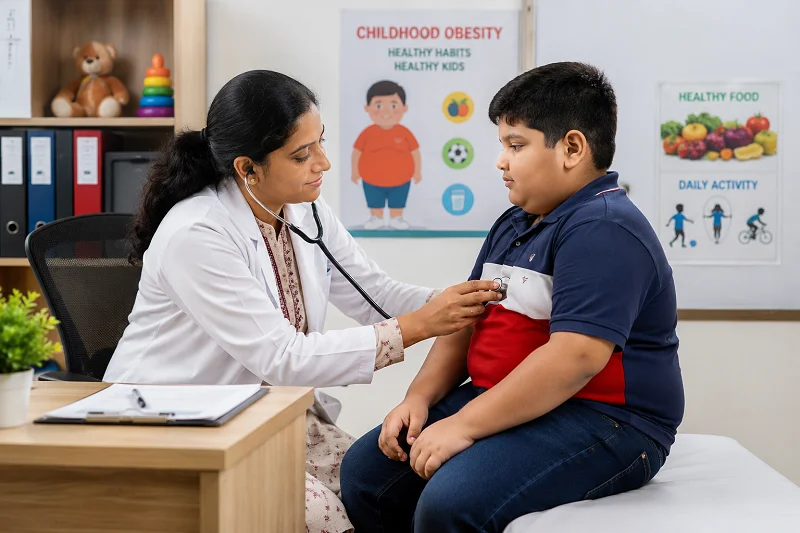
When your child shows unhealthy weight gain, professional pediatric obesity treatment is essential. Self-directed diets often miss underlying causes for childhood obesity like metabolic imbalances, nutritional deficiencies, or hormonal issues that drive excessive weight gain.
Also, habits formed in childhood tend to stick. The patterns you’re setting now – what your child eats, how much he moves, what he does for fun often stay with him into adulthood. It’s one reason why catching weight gain early, when change is still possible, matters so much.
Dr. Saba Ekta, best child specialist in Gaya, provides expert assessment of childhood obesity by evaluating your child’s BMI, growth patterns, dietary habits, activity levels, and screening for medical causes.
Our childhood obesity specialist in Gaya identifies root causes rather than treating symptoms alone. Book an appointment with our top child specialist in Gaya Bihar to understand what’s driving your child’s weight gain and receive personalized treatment guidance.
When Should Parents Seek Medical Advice?
In case you notice any of these symptoms of childhood obesity in your kid, it would be wise to consult a healthcare professional.
Some signs indicate that your child is facing challenges due to being overweight and/or rapid weight gain that can affect the child’s health and ultimate well-being.
- Weight gain in your child has been very rapid in a relatively short time.
- Your child’s stamina gets depleted very fast during even the simplest daily activities (e.g. playing), and this is very different from his/her peers.
- You could tell your kid breathes heavily even when they perform very simple tasks like climbing the stairs, running, etc. and it looks like this is something that normally does not happen.
- You get to know that your child experiences physical barriers when joining physical games or sports that are liked by their friends.
- The family has a history of health problems related to obesity (diabetes, heart disease, high blood pressure).
If your child exhibits any of these signs, you should see a pediatrician in Gaya. The sooner we take action, the less likely it is that they will suffer from serious health problems.
Some parents are unwilling to take their children to the pediatrician for help until several of the symptoms we mentioned above become obvious.
Such postponement of the doctor’s visit makes it very difficult for us to properly recognize the symptoms and to offer the right treatment later on when most of the serious health problems develop.
We can evaluate these red flags through a systematic approach. Based upon the findings of our evaluation, we will provide recommendations to either continue with lifestyle changes, perform additional testing, refer your child to another physician/specialist.

Childhood Obesity & Overweight – Both Need Treatment
Many parents distinguish between “overweight” and “obesity,” delaying intervention for the former. Both require child weight management and childhood obesity management.
BMI-for-age percentiles classify: overweight (85th-95th percentile) and obese (above 95th percentile).
Growth charts reveal whether weight is rising disproportionately compared to height, indicating accumulating fat tissue. Addressing overweight early supports prevention of childhood obesity and prevents progression toward obesity-related complications.
Common Causes of Childhood Obesity
The first step in developing a treatment plan for your child’s obesity is understanding the causes for childhood obesity.
It is difficult to attribute excess weight gain in children to one factor; there are typically multiple contributing factors including diet, lifestyle, genetics, and environment.
The most effective ways to develop an intervention strategy for childhood obesity management and prevention are based upon identifying underlying physiological and medical reasons for an overweight child.
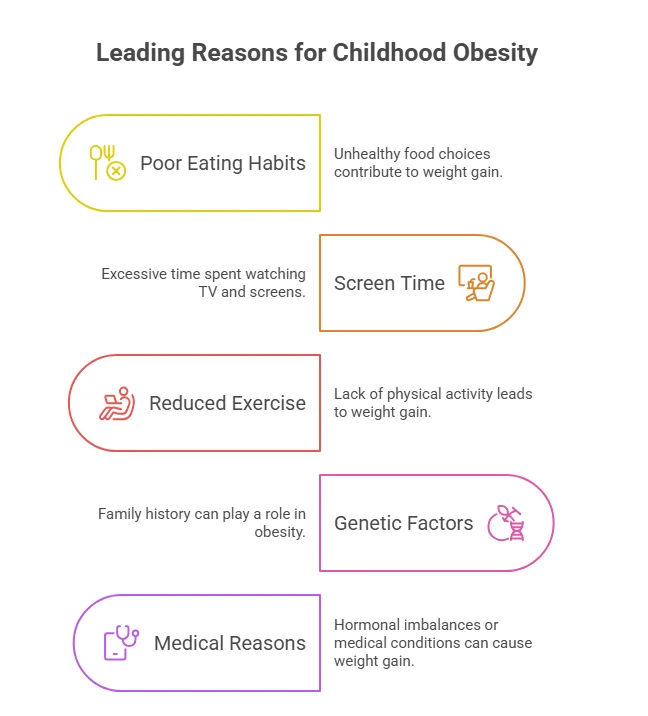
1. Poor Eating Habits
Most children today consume diets consisting of ultra-processed foods and sugar-laden beverages as well as oversized portions.
Children’s taste buds may be accustomed to consuming large amounts of food due to frequent consumption of high-calorie snack products designed by manufacturers to promote excessive consumption.
Children who drink sweetened beverages regularly can ingest approximately 150-250 extra calories each day. Parents have to consistently support healthy eating habits among all household members rather than just limit unhealthy choices for the child.
2. Prolonged Amount of Time Spent Watching TV/Screens
Obesity rates are higher in children who spend greater than two hours per day watching television or other types of electronic media compared to those who watch less.
Watching TV/Screens takes away the opportunity for the child to engage in physical activities, while simultaneously providing opportunities to snack. Combining these two behaviours significantly increases weight gain.
Also, prolonged use of screens at night leads to disrupted sleep cycles, which in addition to the aforementioned increased weight gain, will contribute to an elevated risk of obesity through changes to appetite-regulating hormones.
3. Reduced Levels of Exercise/Physical Activity
Both participation in structured sports and engaging in unstructured physical activity outside decline in modern childhood.
Most children do not meet the recommendations of 60 minutes of moderate to vigorous exercise per day.
While some children get some form of exercise during the week (e.g., recess), they also experience sedentary periods throughout the day (school, transportation to/from school, homework). So, even if they are active on weekends, it does not make up for their lack of physical activity throughout the rest of the week.
Any amount of physical activity counts whether it is walking around while doing chores, playing indoor/outdoor games.
4. Genetic Factors (Family History)
Studies have shown that genetics might explain only about 40-70% of the differences in body weight among people, however, children whose parents suffer from obesity are more at risk of being overweight themselves.
On the other hand, genes can have a say in many aspects of weight such as, but not limited to, the control of one’s appetite, metabolism of the body or even where one tends to store fat.
Nevertheless, it is important to remember that whereas genes set the stage for certain attributes, one’s lifestyle can make a huge difference in whether or not one ends up being able to surpass genetic limitations.
This is why families with obesity history should still try to make the transition to healthier eating practices and find time for exercise that can benefit both themselves and their children.
5. Medical/Hormonal Reasons for Weight Gain
A number of diseases, for instance, thyroid problems, lack of growth hormone, and polycystic ovarian syndrome (PCOS) can result in weight gain without change in one’s eating habits.
Some medications may also cause side effects with increasing hunger or reducing the person’s metabolic rate.
Also, note that appetite loss in children and overweight conditions can occur simultaneously. This might at times reflect the nutritional imbalance leading to the problem of their obesity rather than mere over-eating.
A professional evaluation will determine whether there are any underlying metabolic issues contributing to a person’s obesity that need to be treated separately.
If you think your child’s obesity is caused by medical reasons, please consult Dr. Saba Ekta to schedule a consultation for evaluation and proper assessment of childhood obesity.
Call 922-901-2038 | Visit Dr. A Barkat Multispeciality Hospital to Consult with Dr. Saba Ekta.
Health Risks Associated With Childhood Obesity
Childhood excess weight has both immediate and long term effects on an individual’s health. One of the dangerous assumptions made by many regarding overweight/obese children is that they’ll grow out of it, which is false.
Not only do obese children have serious health risks while still young; they are also at increased risk for more severe, long-lasting health issues than their non-obese counterparts.
Recognizing the childhood obesity symptoms and the potential complications of being overweight will help to alert parents that medical intervention is required.
1. Type 2 Diabetes
Type 2 Diabetes has historically been extremely uncommon in children. However, there are thousands of children who suffer from type 2 Diabetes in India each year.
Because of excess weight, children develop insulin resistance which prevents the body from processing glucose appropriately.
Since the relationship between childhood obesity and risk of diabetes is so closely linked, understanding this connection is important.
Early onset diabetes puts individuals at greater risk for kidney disease, blindness, and amputation in comparison to those whose first episode occurs as adults.
Therefore, type 2 diabetes is one of the most severe childhood obesity complications and requires immediate intervention from a qualified healthcare provider.
2. High Blood Pressure
Normal-weight children less often develop high blood pressure compared to their overweight peers. Hypertension can cause irreversible damage to blood vessels and the heart.
As a result, children with high blood pressure are at a significantly increased risk of having a stroke or experiencing cardiovascular disease before reaching age 40.
3. Joint and Mobility Problems
Overweight/Obese children have excessive stress upon growing bones, joints and ligaments. In addition to knee pain, flat feet and hip problems, children may be forced to limit their participation in sports and other forms of physical activity due to pain.
Unfortunately, the decreased frequency of physical activity results in further exacerbation of obesity.
4. Fatty Liver Disease (NAFLD)
It has recently been reported that approximately 10-15% of obese children suffer from nonalcoholic fatty liver disease (NAFLD). It is characterized by the accumulation of liver fat leading to impaired liver function.
If untreated, NAFLD can lead to cirrhosis. Although many of these children exhibit no obvious signs and symptoms until after significant liver damage has occurred, liver biopsy is typically used to confirm diagnosis.
5. Psychological Effects of Childhood Obesity
In addition to physical complications, children who are overweight/obese experience emotional and social challenges such as teasing, social isolation and low self-esteem. Rates of depression and anxiety are higher among this group of youth.
These mental health effects experienced during childhood will affect the quality of their interpersonal relationships and future career success regardless of whether they successfully lose weight as adolescents or adults.
Do not let these health complications continue to escalate.
Schedule your child’s medical assessment today to determine if they are at risk for the above complications and provide them with a better chance at preventing these health issues. Our pediatric obesity treatment in Gaya provides comprehensive risk assessment and intervention.
Can Childhood Obesity Affect Growth?
Yes – obesity can affect growth.
There are several ways in which obesity affects growth. When a child suffers from extreme obesity, it can trigger premature closure of growth plates thereby limiting final height.
Overweight/Obese children also put strain on developing bones and joints which causes pain and discourages children from engaging in the physical activities needed for proper bone development.
Finally, obesity negatively impacts a child’s balance, posture and motor skills which directly affects a child’s athletic abilities and coordination patterns developed in childhood.
ALSO READ: Signs of Growth Problems in Children
How Childhood Obesity is Diagnosed?
A diagnosis is much more than simply how much your child weighs. It requires a complete assessment of childhood obesity that includes:
- a review of their medical history (when did weight begin increasing, were there any symptoms?),
- a review of their family history (are other members of their family obese, have they experienced related disease?).
- the use of Growth Charts (comparison of measurements to percentiles),
- a calculation of their child’s body mass index (BMI) based on their height and weight,
- a physical exam (blood pressure, identification of possible metabolic problems through physical signs),
- and any additional testing as may be necessary (blood work for diabetes, cholesterol levels, liver functions; thyroid testing, if indicated).
Schedule a diagnostic evaluation with Dr. Saba Ekta, our best child specialist in Gaya Bihar, to determine your child’s overall health and create an individualized plan for childhood obesity management.
NOTE: Growth Charts Matter More Than Adult BMI
Growth charts take into consideration variations by both age and gender, whereas adult BMI cutoffs are fixed.
A rising weight percentile can indicate troublesome weight gain, even if the absolute number is below the obesity threshold.
The growth chart also allows you to see when your child has had an increase in weight but no increase in height. This indicates an increase in fat and does not show up using adult BMI scales.
Therefore, identifying this trend is critical for implementing early intervention.
When Should Parents Be Concerned About Child’s Weight Gain?
Sudden pediatric weight gain can be a warning sign that something is medically wrong. Sudden weight gain of a few pounds over several weeks as opposed to months may signal some type of problem medically.
Three to four months of persistent weight gain in children after making all necessary lifestyle changes indicates metabolic factors that need to be investigated.
If your child has associated symptoms such as fatigue, difficulty breathing, abdominal pain, then it could indicate that complications are beginning to develop, or they have an underlying medical condition causing them to gain excessive weight.
Schedule a visit for overweight child treatment immediately if you observe any of the following:
- Sudden weight gain in your child over a short period.
- Your child continues to gain weight regardless of making all necessary lifestyle changes.
- Your child has other symptoms (fatigue. difficulty breathing, mood swings)
- There is a family history of metabolic diseases and you see signs of excess weight.
- Your child expresses emotional distress regarding their weight.
Consult our best child specialist in Gaya for expert evaluation and guidance tailored to your child’s needs. Our childhood obesity treatment near me services provide accessible, evidence-based care.
Why Consult Dr. Saba Ekta for Childhood Obesity?
Dr. Saba Ekta brings specialized pediatric expertise combined with practical experience managing childhood obesity in Gaya’s population.
Her approach to childhood obesity management guidelines and management of childhood obesity addresses root causes rather than superficial symptoms, ensuring sustainable results.
Our pediatric obesity treatment in Gaya program combines evidence-based strategies with family-centered care. Here are some facilities you can expect at the hospital:
- Personalized Nutritional Guidance
- Advice on Family-Based Lifestyle Changes
- Regular Follow-Up and Growth Monitoring
Regular monitoring maintains motivation and allows Dr. Saba Ekta to adjust strategies based on actual progress.
Professional guidance alongside child vaccination planning ensures comprehensive preventive health monitoring. Routine pediatric visits provide opportunities to address emerging health concerns before they escalate.
Frequently Asked Questions
1. What causes childhood obesity?
Childhood obesity results from multiple factors: unhealthy eating patterns, insufficient physical activity, genetics, family lifestyle, screen time, and sometimes underlying medical conditions or medications.
Understanding the causes for childhood obesity helps identify appropriate treatment approaches.
2. Can child obesity be cured?
Childhood obesity cannot be “cured” like an infection, but it can be effectively managed and reversed through sustained lifestyle changes addressing dietary patterns, activity levels, and family habits.
Following childhood obesity management guidelines significantly improves outcomes.
3. Can an obese child lose weight?
Yes, children can reduce excess weight through appropriate lifestyle modifications. Pediatric obesity treatment focuses on allowing normal height growth while gradually reducing excess weight, not rapid weight loss.
4. Can 12 year olds take GLP-1?
GLP-1 medications like semaglutide are being studied in adolescents but remain limited in pediatric use. Discuss specific medication options with your top child specialist in Gaya based on your child’s individual circumstances.
5. At what age can a child be obese?
Children can be classified as obese from age 2 years onward using BMI-for-age percentiles. Early assessment of childhood obesity is important for preventing complications.
6. How to help a child lose weight without making them feel bad?
Frame changes as family health improvements rather than focusing on the child’s weight.
Emphasize activities you enjoy together, foods that taste good and are healthy, and celebrating strength and capability rather than appearance. This aligns with healthy weight management for children principles.
7. How can my 7 year old lose belly fat?
Belly fat reduction in children follows the same principles as overall weight management: balanced nutrition, regular physical activity, adequate sleep, and reduced screen time through childhood obesity management strategies.
8. What is the 5 2 1 0 rule for kids?
The 5-2-1-0 rule represents daily targets: 5 servings of fruits and vegetables, 2 hours or less screen time, 1 hour physical activity, and 0 sugary drinks. These targets support prevention of childhood obesity.
9. How do doctors diagnose obesity in children?
Doctors use BMI-for-age percentiles, growth chart assessment, medical history, family history, physical examination, and sometimes blood tests.
This comprehensive assessment of childhood obesity identifies root causes.
10. Can childhood obesity be reversed?
Yes, childhood obesity can be reversed through sustained lifestyle changes. The younger the child and earlier intervention begins, the higher success rates for weight normalization when following proper childhood obesity management guidelines.
11. When should I consult a childhood obesity specialist in Gaya?
Consult a best child specialist in Gaya Bihar when your child shows rapid weight gain, develops obesity-related symptoms, has a strong family history of obesity-related disease, or fails to improve despite implemented lifestyle changes.
12. Does childhood obesity increase the risk of diabetes?
Yes, childhood obesity and risk of diabetes are closely linked. Excess weight causes insulin resistance, and early-onset diabetes carries higher lifetime complication risks than adult-onset diabetes.
13. What foods should overweight children avoid?
Rather than listing “forbidden” foods, emphasize limiting: sugary drinks, ultra-processed snacks, fried foods, and foods with added sugars through pediatric nutrition counseling. Focus on adding whole foods rather than restriction.
14. Can obesity affect a child’s growth and development?
Yes, obesity affects growth and development through early puberty, bone and joint stress, and altered movement patterns. This is why management of childhood obesity during critical growth periods is important.
15. How can parents help children maintain a healthy weight?
Create a home environment supporting healthy weight management for children, model active and nutritious living, involve children in meal planning and cooking, establish consistent sleep schedules, limit screen time, and emphasize family health rather than individual dieting.
Seeking Childhood Obesity Treatment in Gaya?
The problem of childhood obesity can be addressed through timely, thorough interventions based on scientifically-proven guidelines for managing childhood obesity, as well as evidence-based childhood obesity treatment and prevention programs.
Typically a person will develop habits during their youth that they will maintain throughout their lifetime. Therefore, if at age 10 a child enjoys eating vegetables and playing outdoors it is likely he or she will continue to do so throughout his/her life.
Therefore, establishing a basis for health for your child today will shape your child’s long-term pattern of health for many years.
Plus, early intervention helps prevent serious health problems while establishing an ongoing plan for healthy weight management for children. Management of childhood obesity requires all members of the child’s family make lifestyle choices related to diet and activity level together, rather than the child alone going on a diet.
Consult Dr. Saba Ekta at Dr. A Barkat Multispeciality Hospital for personalized pediatric obesity treatment in Gaya.
Dr. A Barkat Multispeciality Hospital at Civil Lines, Behind Aziza Plaza, Opposite Bharat Sewa Ashram, Enayat Colony, Gaya, Bihar 823001
Call – 922-901-2038 | Available 24 x 7 for Pediatric Emergencies.




Leave a Reply