
Here’s the thing about being pregnant – it gets quite demanding for your body and mind. You need to show up for regular appointments for prenatal care and blood tests.
However, blood tests throughout pregnancy aren’t punishment. They’re how your doctor stays in the loop about what’s actually happening with you and your baby. Sometimes a test catches something treatable. Sometimes everything’s fine. Either way, knowing beats guessing.
There are some essential blood tests for screening you and getting more information about your physical health, the baby’s well-being and potential risks during pregnancy.
Dr. Sania Akhtar at Dr. A Barkat Multispeciality Hospital in Gaya recommends different tests at different stages of pregnancy. She’ll tell you which tests matter for your pregnancy, why you’re getting them, and what the results actually mean.
Some baseline tests will be suggested at the initial visit and others during specific trimesters. This helps detect possible complications. This guide today will walk you through some essential tests so that you can get to every appointment with the required information and confidence.
Want to talk through your testing plan? Consult with the best gynecologist in Gaya who can create a personalized testing plan for your specific needs.
Pregnancy Blood Tests in Gaya During Pregnancy

Your doctor will advise you for several tests throughout pregnancy. Different times, different tests. You’ll probably get confused about which one is which. That’s normal. Here are the most common blood tests during pregnancy and why they matter:
1. Complete Blood Count (CBC)
This test counts your red blood cells, white blood cells, and platelets. Really what the doctor is looking for is the possibility of anemia. Your baby’s gonna take what it needs for iron and development.
If you’re short, you’ll feel exhausted and the baby doesn’t get what it should. But it’s an easy fix – iron supplements and a few dietary changes. A quick test helps catch the issues of anemia and infections early.
2. Blood Group and Rh Factor
This tells you your blood type and if you’re Rh positive or negative. Here’s the thing: if you’re Rh negative and your baby’s Rh positive, there’s a potential issue. Your immune system might develop antibodies that attack your baby’s red blood cells. It happens. Doctors watch you closely in these cases.
3. Glucose Screening
The gynecologist is checking for gestational diabetes with this test. Your body may quit managing your blood sugar properly during pregnancy, and it’s common to develop gestational diabetes.
But the problem is that high blood sugar means your baby’s birth weight might get affected, labor gets harder, along with more complications.
The screening for this test is around weeks 24-28. If it’s actually gestational diabetes, diet usually handles it. Sometimes you need meds. Either way, it’s doable.
4. Thyroid Function Test
Your thyroid controls metabolism. If it’s not working right during pregnancy, you may feel exhausted and sluggish. The most important part is that your baby’s brain development also depends on thyroid hormones. An underactive thyroid needs medication. It’s not complicated to treat when detected on time.
5. Tests for Infections
HIV, hepatitis B and C, syphilis, rubella. Yeah, the doctor will test you for all of it. They do it because catching these early means your doctor can treat you and keep it from passing to your baby. It’s a standard test to check for sexually transmitted infections.
6. Genetic Screening Tests (Double or Triple Marker)
These measure protein and hormone levels in your blood, often combined with ultrasound for better accuracy. They give you odds on whether your baby might have Down syndrome or other chromosomal issues.
→ Book an Appointment for Initial Pregnancy Tests Schedule
Common Pregnancy Blood Tests – Quick Reference Table
| Tests | Purpose | When Done |
| CBC | Detect anemia/infection | First trimester |
| Blood Group & Rh | Rh incompatibility | Early pregnancy |
| Blood Sugar Test | Gestational diabetes | 24-28 weeks |
| Thyroid Test | Thyroid health | Early pregnancy |
| HIV/Hepatitis Screening | Infection screening | First visit |
| Double Marker/Triple Marker | Genetic screening | Specific weeks |
Why Are Blood Tests Important During Pregnancy?
Most people think blood tests mean something’s wrong. That’s not how it works. A lot of the time it’s just your doctor doing routine maintenance.
You do it because routine prenatal blood tests help ensure safer pregnancies by catching treatable conditions early. These are not necessarily a sign of any risk but precautionary steps that you must take to ensure a healthy pregnancy.
- Monitor Maternal Health: Blood tests show how your body is adapting to pregnancy. What the doctor is actually looking for is oxygen levels (is your blood actually carrying oxygen?), infections (if your body is fighting anything?), iron stores (is it enough for you and the baby?). It’s practical to get these tests done on time.
- Detect Infections: An infection during pregnancy is not good news. It can harm the baby. There’s syphilis, HIV, hepatitis. Yes, it’s important to test for these as well. Not catching it on time seems like a bad plan and will lead to complications later on for both you and the baby.
- Identify Anemia: Your blood volume and iron needs go up when you’re pregnant. Your baby’s gonna need the iron. Anemia can reduce oxygen delivery to your baby. Anemia is super common and totally fixable with an early CBC test.
- Check Blood Group & Rh Factor: Note that Rh incompatibility happens when your immune system and your baby’s blood type clash. Knowing your blood type is critical. Special precautions prevent your body from developing antibodies that could affect future pregnancies.
- Detect Gestational Diabetes: Gestational diabetes shows up in about 2-10% of pregnancies. You don’t catch it, the baby gets huge, labor gets brutal, both of you end up diabetic later. Thus, it’s worth catching on time and dietary changes and medications can fix it.
- Screen Genetic Risks: There’s also the genetic screening thing – double marker, triple marker. Combined with ultrasound, they can identify Down syndrome and some other chromosomal issues with pretty solid accuracy (80-90% or so). While not diagnostic, you get information regarding further testing needs.
Dr. Sania Akhtar can walk you through which tests actually matter for your situation when you come in for an appointment. Learn more about creating a healthier pregnancy with healthy pregnancy tips from Dr. Sania Akhtar.
Pregnancy Blood Tests by Trimester
Your pregnancy’s got three phases called trimesters. Each one has different blood test needs.
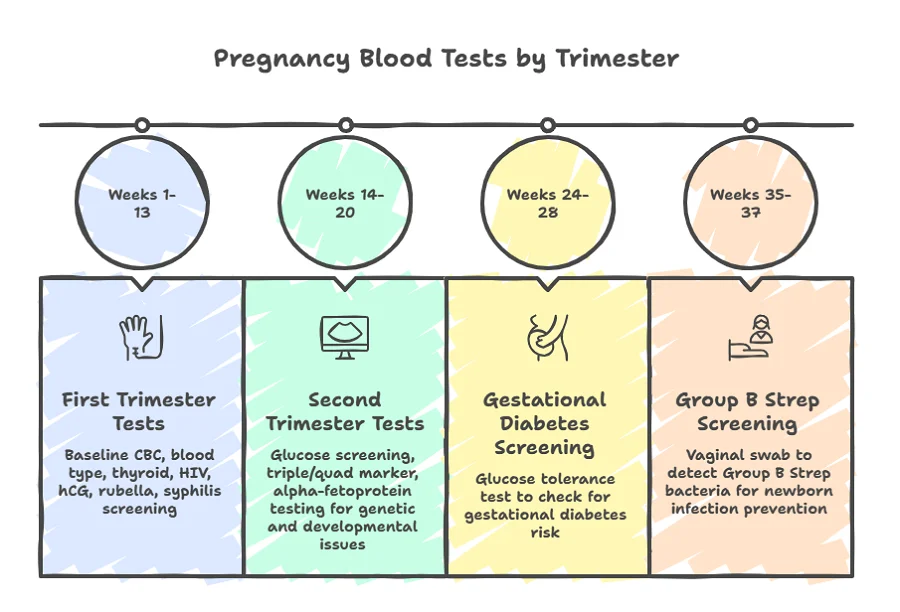
1. First Trimester Blood Tests (Weeks 1-13)
Your first appointment is baseline stuff. Your doctor’s setting a starting point and figures out if you have any existing conditions that need management.
You’ll get a bunch of tests during your first antenatal visit:
- CBC to check for anemia and infections,
- blood type and Rh status,
- thyroid tests,
- HIV and hepatitis screening,
- hCG (confirms the pregnancy’s actually progressing and it’s not ectopic),
- rubella immunity check,
- syphilis screening.
If something comes back weird, your doctor talks you through what it means. Maybe you need more tests. Maybe closer monitoring. Or maybe you need a specialist for some health issues. Dr. Sania Akhtar will be straightforward about what comes next.
Second Trimester Blood Tests (Weeks 14-20)
The focus shifts now. Baby’s development, your metabolic health. Genetic screening happens in this window.
You’ll probably get:
- glucose screening (the gestational diabetes risk check, around weeks 24-28),
- the triple or quad marker test,
- and alpha-fetoprotein testing (checking for neural tube defects),
This trimester’s where most developmental issues get caught. That’s why doctors stay thorough with the blood work.
For complete pregnancy care in Gaya, regular monitoring during this trimester ensures your baby’s development is on track and that any maternal complications are caught early.
Third Trimester Blood Tests (Weeks 21-40)
Testing slows down but stays important. This is your final check before you deliver.
Standard third trimester tests include:
- CBC again (seeing if anemia developed),
- sometimes glucose monitoring if you had gestational diabetes risk earlier, and
- Group B Strep (GBS) screening around weeks 35-37.
GBS is bacteria – about 10-30% of pregnant women carry it without knowing. If you test positive, you get IV antibiotics during labor. This stops newborn infection. That’s the whole reason doctors screen for it.
→ Consult Dr. Sania Akhtar to find out the exact tests you would need.

What Happens If Blood Test Results Are Abnormal?
Your doctor isn’t surprised when abnormal results come back. Most often they already have a plan in place.
Most of these abnormal findings are actually treatable. Anemia is treated with iron supplements. Gestational diabetes is treated with diet management, sometimes medication.
Thyroid problems are also manageable throughout pregnancy with medications. None of it is a grave concern when detected on time. It’s just information your doctor needs to keep you and your baby safe.
Sometimes the abnormal result needs follow-up. Another test. An ultrasound. Maybe an amniocentesis if the genetic screening showed risk. Your doctor will explain what it means and what comes next. Not the scary version of the explanation but the actual version.
Common next steps after abnormal results include:
- Diet changes based on whatever showed up
- Supplements (iron, calcium, vitamin D)
- Repeat testing to make sure the first result was accurate
- Coming in more often for monitoring
- Specialist referral if needed
Some people get multiple abnormal results. Some get none. Both are normal. The goal is catching stuff that matters and managing it, not freaking out about every number that’s off.
Some abnormal results need further testing like an ultrasound or amniocentesis to confirm findings.
Dr. Sania Akhtar deals with abnormal results all the time. She creates management plans that actually work, and she takes the time to answer your questions instead of just handing you a result slip and sending you on your way.
Got an abnormal result you’re trying to understand? Talk to Dr. Sania Akhtar – Book Appointment!
For high-risk pregnancy care in Gaya, Dr. Sania Akhtar creates personalized management plans for any abnormal findings discovered during blood testing.
Pregnancy Blood Test Preparation Instructions
Proper preparation is a key factor in receiving accurate results and having a smooth testing procedure. Here is what you should do prior to having your blood drawn:
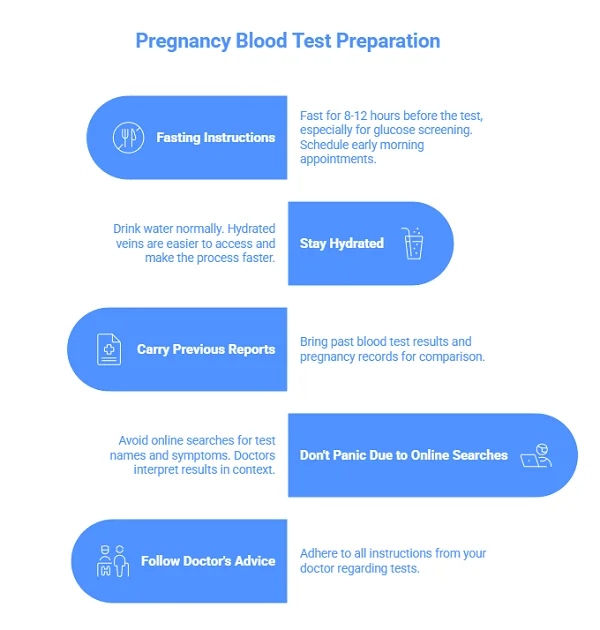
1. Fasting Instructions: It is known that fasting is a necessity for certain blood tests (which essentially means not taking any food for 8-12 hours prior to the test).
Actually, it mostly pertains to glucose screening. Your doctor will indicate to you the particular tests which require fasting. It is a good idea to schedule your appointments early in the morning so your fasting time will be overnight while you are sleeping.
2. Stay Hydrated: Water intake should be your normal practice prior to the test. Hydrated veins are more visible and the process of a blood draw is faster. Conversely, dehydration can be a cause of complications.
3. Carry Previous Reports: Always have with you any previously done blood test results or pregnancy records from before when you started your care at the current hospital. This gives your doctor an insight into the changes, and a way to compare results over time.
4. Don’t Panic After Online Searches: Needless to say, it is many times very tempting to search the internet for names of tests and symptoms, but the downside is that symptom checking and health anxiety websites almost always exaggerate worst-case scenarios. It is your doctor who interprets your results in the right context; there is quite a good amount of normal variation and, on the whole, most results are very reassuring.
5. Follow Your Doctor’s Advice: Every little instruction from your doctor in relation to various tests counts. In case your doctor tells you that fasting is necessary, then skipping breakfast is the correct move. If they say that you should bring a certain document, then bring it.
Adhering to these guidelines not only guarantees that the results will be correct but also that you will be saved from having to go through the testing all over again.
ALSO READ: When Should You See a Gynecologist for the First Time?
Where to Get Pregnancy Blood Tests in Gaya?
Accurate prenatal diagnostics play a critical role in effective pregnancy management. It’s important that your blood testing is performed at a center which has the expertise in obstetrics, high-quality pathology laboratories, and the option to coordinate with your gynecologist.
Dr. A Barkat Multispeciality Hospital in Gaya is an excellent choice for pregnancy-related blood testing as it has an experienced gynecology team. This hospital is equipped to conduct thorough prenatal tests, provide diagnostic testing when required, and offer emergency pregnancy assistance if there are any complications.
Having both in-house pathology services and collaboration with Dr. Sania Akhtar ensures that your tests are examined quickly and explained in relation to your overall pregnancy.
Besides testing, the hospital also has a range of maternal care services such as regular counseling and handling of high-risk pregnancies. Your blood test results are not just numbers; they are a part of your overall prenatal care program.
If you are deciding between natural birth and scheduled cesarean based on your medical condition, refer to normal delivery vs C-section in Gaya.

Frequently Asked Questions
Following are some commonly asked questions women have about their prenatal care and the possibility of tests. Find your answers below.
1. Which blood tests are mandatory during pregnancy?
Typically, checking the blood group, Rh factor, a complete blood count (CBC), screening for blood sugar, and testing for infections like HIV, hepatitis, and syphilis are considered basic requirements. Besides these, other tests such as thyroid function and genetic screenings are commonly advised.
2. When are pregnancy blood tests done?
Your first blood tests will be done at your very first antenatal or prenatal visit (first trimester). Besides these, there will be blood tests at set times such as the glucose screening at 24-28 weeks, Group B Strep or GBS screening at 35-37 weeks, and testing based on any risks factors that may be present.
3. When should you do a blood test for pregnancy?
You should see your doctor to get the pregnancy confirmed if you think you may be pregnant (usually 1-2 weeks after a missed period). Pregnancy blood test can be done right away, although some tests are best carried out at certain weeks of pregnancy.
4. Do pregnancy blood tests require fasting?
Fasting is generally not required for most routine pregnancy blood tests except for the glucose screening. Your doctor would inform you if you need to fast for a particular test. In most cases, it is only the glucose test.
5. Can blood tests detect pregnancy complications?
Blood tests can be used to identify the risk for several problems like diabetes, anemia, thyroid dysfunction, infections, and certain genetic conditions. Nonetheless, a few complications may require an ultrasound or a physical examination to be properly diagnosed.
6. Are pregnancy blood tests safe?
Pregnancy blood tests are absolutely safe for you and your baby. A very tiny needle is used and getting a blood sample is not a risk to your pregnancy.
7. What is the price of a blood pregnancy test in Gaya?
Pricing is subject to the center you choose and the extent of tests performed. A simple pregnancy blood test is around 300-500 rupees; a package of comprehensive prenatal screening could cost up to 2,000-5, 000 rupees. Get in touch with Dr. A Barkat Multispeciality Hospital to know the exact pricing for pregnancy blood test procedures.
8. Where can I get prenatal blood tests in Gaya?
Dr. A Barkat Multispeciality Hospital offers prenatal blood tests services under the care of Dr. Sania Akhtar who handles your testing and care plan during pregnancy. Contact 922-901-2038 to schedule antenatal visits.
Book Your Prenatal Care Appointment Today!
Blood tests are your window into pregnancy health. They’re not something to fear—they’re tools that catch problems early and give your doctor the information needed to keep you and your baby safe.
From first trimester screening through final checks before delivery, regular prenatal blood tests build confidence in your pregnancy.
Your journey through pregnancy deserves expert care from someone who listens to your concerns and explains each step. Dr. Sania Akhtar at Dr. A Barkat Multispeciality Hospital provides comprehensive pregnancy blood test guidance, prenatal monitoring, and birth planning tailored to your health.
Whether you need routine antenatal care, management of high-risk pregnancy factors, or postpartum support after delivery, the hospital’s experienced team is here for you.
Book your pregnancy blood test and prenatal appointment today. Visit Dr. A Barkat Multispeciality Hospital at Civil Lines, Behind Aziza Plaza, Enayat Colony, Gaya or call at 922-901-2038. Take the first step toward confident, informed pregnancy care with Dr. Sania Akhtar guiding every stage of your motherhood journey.



Leave a Reply