
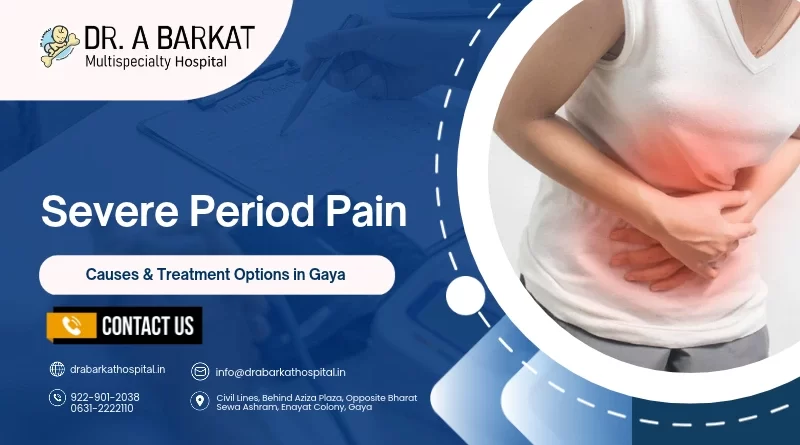
If your period pain is so severe that it makes you stay in bed every month or causes you to miss school or work, or it barely gets better even after taking painkillers, you’re not imagining things.
Your pain is valid, and more than that, it is not something you should be tolerating. In most cases, a few mild cramps are quite normal.
Severe pain, which is medically referred to as dysmenorrhea, is different, and it very often indicates the presence of an illness which can be treated, such as endometriosis or fibroids. The sooner we uncover the cause, the sooner you can start feeling better.
In this blog we will cover how to tell ordinary cramps from warning signs, which conditions usually sit behind severe pain, and how we diagnose and treat them.
Understanding the Pain: Normal vs. Severe Cramps
Many women struggle to understand whether their pain is “normal” or something more. If you suffer from period related pain, the following table will help you understand the difference and when to consult a hospital in Gaya to seek medical attention.
| Symptom | Normal Period Pain | Severe Period Pain (Seek Medical Help) |
| Intensity | Mild to moderate; manageable | Debilitating; stops daily activities, school or work |
| Duration | Lasts 1–2 days | Lasts throughout the cycle or gets progressively worse |
| Relief | Responds well to over-the-counter painkillers | Painkillers offer little to no relief |
| Other Symptoms | Mild bloating or fatigue | Heavy bleeding, nausea, pain during intercourse |
If most of your symptoms sit in the right hand column, don’t wait for them to settle on their own. Pain that progressively gets worse, or that it accompanies with heavy bleeding, warrants a proper physical check up instead of another bottle of medicine.
>> Experiencing severe period pain? Book a Gynecology Appointment.
Common Medical Causes of Severe Period Pain
Period pain can be primary, caused by chemicals that make the uterus contract, or secondary, caused by an underlying condition. Below are the four common causes explained simply.
1. Endometriosis
Endometriosis happens when tissue similar to the uterine lining grows outside the uterus, often on the ovaries, fallopian tubes or pelvic walls. Because the symptoms overlap, it is important to understand the key differences between endometriosis vs PCOS and how each condition affects the body.
Put simply, PCOS mainly throws off the balance of the hormonal system by causing the production and distribution of reproductive hormones to be out of balance, which then affects ovulation and the regularity of menstrual cycles.
Meanwhile, endometriosis often results in deep and intense pain in the lower abdomen that is related to menstrual cycles and may worsen over time.
Apart from that, you may still have the problem of enduring the pain during intercourse or the difficulty in conception and so forth, which can all also result in deep discomfort in the lower abdominal area.
The best way to find out what your problem actually is is to get a medical examination and, if needed, scans to help identify the source. Therefore, it would be a good idea not to try diagnosing yourself.
2. Uterine Fibroids
Uterine fibroids are non cancerous growths that develop in or on the wall of the uterus.
Some fibroids are completely asymptomatic while, if they grow large, they can result in heavy periods or bleeding that lasts longer than normal, abdominal cramps, pressure in the lower part of the abdomen and also pressure on the bladder leading to frequent need to urinate.
It is actually quite difficult to determine whether a fibroid is causing a disturbance unless you find out the size, the number of fibroids and particularly where it is located.
As it is such a common condition for women in their reproductive years, one should not automatically panic upon the discovery of fibroid. It will be through a scan that we can pinpoint their exact location which in turn gives us an insight to the best possible treatment.
3. Pelvic Inflammatory Disease (PID)
Pelvic inflammatory disease is an infection of the uterus, fallopian tubes or ovaries. It usually starts with bacteria travelling upward from the vagina and cervix. It can cause lower abdominal pain, fever, unusual discharge, pain during sex and bleeding between periods.
Mild symptoms may appear quite bearable but untreated PID may leave scar tissue in the fallopian tubes, potentially affecting fertility.
If bleeding between periods is associated with either pain or discharge, then do see a doctor as soon as possible, so that you can be certain no infection is present, and you are administered the appropriate antibiotics if there is.
4. Adenomyosis
Adenomyosis is a condition that results from the endometrial tissue which is a part of the uterus lining starting to grow into the muscular wall of the uterus causing an enlargement and tenderness of the uterus itself.
This can lead to heavy, long and painful menses as well as intense cramping pain. This diagnosis is mainly common among women that are in their thirties and forties.
Sometimes the symptoms are overlapping with those of fibroids and endometriosis. Through ultrasound or an MRI test adenomyosis can be visualized or detected.
The possible treatment methods vary from using some basic painkillers and hormonal medications to surgical interventions, in some severe symptomatic cases, depending on your age and your plans for pregnancy.
These conditions may require different treatment regimens. Severe or increasing menstrual pain deserves serious attention, even if painkillers bring short term alleviation.
>> Get the right care for severe period pain at Dr. A Barkat Multispeciality Hospital, Gaya.

Treatment Options for Severe Period Pain in Gaya
Severe period pain management depends on the reason that triggered it, severity of the symptoms at the time, and other medical factors involved. At Dr. A Barkat Multispeciality Hospital, treatment options include medical management and surgery when necessary.
Medical Treatment
Anti inflammatory pain relievers can help ease menstrual cramps. Hormonal treatments, including contraceptive pills or a hormone releasing IUD, may reduce pain and heavy bleeding in suitable cases.
Antibiotics may be prescribed for bacterial infections such as pelvic inflammatory disease (PID). Heat therapy and lifestyle changes can also help manage symptoms.
Additional things that can be tried alongside medicine are heat therapy (for example, using a hot water bag on the abdomen or a heat pad), lifestyle modifications (like having regular exercise which is especially a good thing at times when the woman is not in a period) etc., all of which can alleviate symptoms.
Surgical Treatment
Surgery may be considered when medication doesn’t provide sufficient relief or an underlying condition requires an operation. If you’re wondering if fibroids can be treated without surgery, small fibroids with mild symptoms may be managed with medicines and regular monitoring.
However, surgery may be considered when symptoms persist or an underlying condition requires it. Laparoscopic surgery for fibroids, endometriosis and ovarian cysts uses small incisions which means less scarring, less post operative discomfort and a shorter hospital stay.
The right treatment depends on what’s causing your period pain and how severely it affects your daily life. With proper evaluation and timely care, many causes of menstrual pain can be managed effectively.
>> Book a consultation to find suitable treatment for severe period pain in Gaya.
Why Choose Dr. A Barkat Multispeciality Hospital?
The right doctor makes a real difference. At Dr. A Barkat Multispeciality Hospital, our gynecology department is led by Dr. Sania Akhtar, an experienced female obstetrician and gynaecologist with an MS in Obstetrics & Gynaecology.
From diagnosing menstrual problems to managing pregnancy related concerns, our team focuses on identifying the cause of your symptoms and recommending appropriate treatment. We also offer advanced laparoscopic surgical procedures for conditions such as fibroids and endometriosis.
If you’re looking for a gynecologist in Gaya, Dr. A Barkat Multispeciality Hospital offers OPD, laboratory, operation theatre and emergency services under one roof, 24 hours a day, seven days a week.
FAQs
1. When should I see a gynecologist in Gaya for period pain?
See a doctor if pain disrupts daily life, worsens, or doesn’t improve with painkillers. Heavy bleeding, fever, fainting or pain during intercourse also need attention.
2. Can severe period pain affect fertility?
It can, depending on the cause. Fertility may be compromised through endometriosis, PID and fibroids. However, having a painful period is not an immediate barrier to getting pregnant.
3. Is laparoscopic surgery safe for period related conditions?
It is generally safe when appropriately performed, but every surgery carries risks. Small incisions may mean less pain and faster recovery than open surgery.
4. Will period pain go away on its own?
Mild cramps may improve, but pain caused by conditions such as endometriosis or fibroids may need treatment.
5. What can I do at home for period cramps?
Try a heating pad, gentle walking and rest. Seek medical advice if the pain is severe or keeps returning.
Don’t Ignore Severe Period Pain
Painful menstrual cycles are your body’s signal, and it’s worth listening to. Endometriosis, fibroids, PID or adenomyosis can all cause significant symptoms, but the good thing is that treatment options are available.
It is not right to assume painful menstrual cycles are unavoidable or unalterable. A correct diagnosis, timely treatment, and a few changes in your lifestyle will be your weapons, so, your pain levels and, at the same time you will achieve a better quality of life.
If you are experiencing painful menstruation every month, consult Dr. Sania Akhtar at Dr. A Barkat Multispeciality Hospital, for a general health evaluation and a tailored treatment plan.

Leave a Reply