
Can fibroids be treated without surgery? Short answer: yes, often. Whether you actually need surgery comes down to a handful of things – how big the fibroid is, how many you have, where they sit in the uterus, what symptoms they’re causing, your age, your general health, and whether you’re planning to get pregnant. A lot of women carry small, quiet fibroids for years and never need an invasive procedure to get them removed.
Some cases do need a closer look, though. If your periods have gotten noticeably heavier, or you’re feeling pressure low in your belly that wasn’t there before, it’s worth knowing what your real options are before anyone talks about surgery.
Dr. Sania Akhtar, Gynecologist and OB-GYN at Dr. A Barkat Multispeciality Hospital, Gaya, works through this exact question with patients daily deciding between watching and waiting versus stepping in, based on what’s actually happening in your body.
What Are Uterine Fibroids?
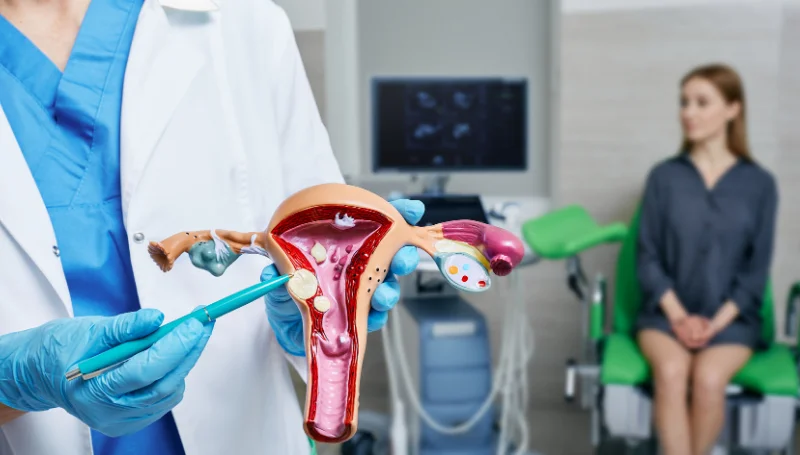
Uterine fibroids are benign growths in or around the uterus. Some grow inside the uterine wall, some push outward, some hang off a stalk. Fibroid growth is unpredictable; one fibroid might sit at pea-size for a decade, another can reach the size of a grapefruit within a couple of years.
Fibroids in women don’t follow a script. Plenty of women never feel a thing. Others deal with heavy bleeding or pain that gets in the way of a normal week. That’s the whole reason treatment isn’t standardized – fibroid size, location, and how your body reacts all pull in different directions.
The type and location of a fibroid matters when you’re weighing your options, which is exactly what’s covered in fibroid treatment in Gaya.
Once you know what you’re actually dealing with, the real question comes next: does it need treatment now, or can it sit and be watched?
Can Fibroids Be Treated Without Surgery?
Yes. A lot of fibroids can be managed without an operation, especially when symptoms are mild or you barely notice them. Fibroid treatment without surgery is usually where doctors start, and surgery gets reserved for cases where the conservative route isn’t cutting it.
A few things drive this call. Symptom severity is the big one – occasional spotting and soaking through a pad every hour are two completely different conversations.
Fibroid location and size matter almost as much: a small one tucked into the outer wall behaves nothing like a large one pushing into the uterine cavity. Doctors also track how fast it’s growing, since a fibroid that’s been stable for two years isn’t the same emergency as one that doubled in six months.
Heavy menstrual bleeding, pelvic pain, and pelvic pressure are usually what tips things toward active treatment. Age and whether you want children factor in too; someone trying to conceive next year gets a different conversation than someone a few years from menopause.
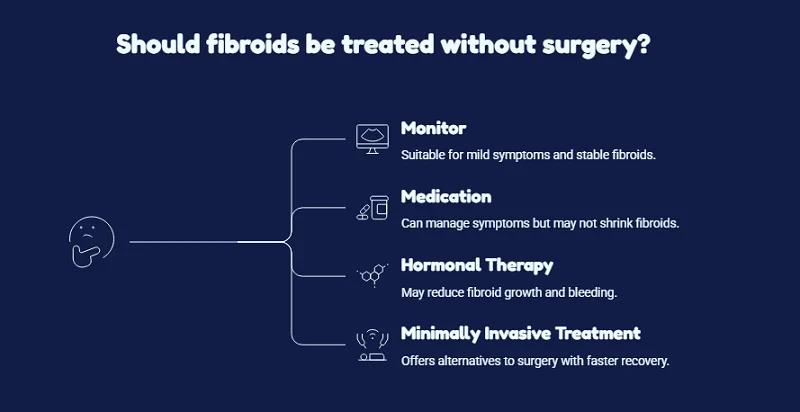
When surgery isn’t the immediate move, the alternatives are monitoring, medication, hormonal therapy, or minimally invasive fibroid treatment – each covered below.
A gynecological evaluation is really what determines whether monitoring or active treatment makes sense, so it’s worth speaking with the best gynecologist in Gaya before deciding anything on your own.
With the factors out of the way, it’s worth walking through each non-surgical option on its own.
Non-Surgical Treatment Options for Fibroids
Following are some of the non-surgical methods of fibroid treatment most commonly used by gynecology specialists.
1. Watchful Waiting and Regular Monitoring
Fibroid monitoring without jumping into treatment is common when symptoms are mild or nonexistent. This isn’t the same as ignoring the problem, you’re still tracking it.
You keep an eye on your symptoms, show up for routine check-ins, and get imaging done when your doctor thinks it’s warranted. Nothing changes, treatment waits. Something changes with symptoms like heavier bleeding, new pain – the treatment plan also shifts with it.
2. Medicines for Symptom Management
Fibroid medication goes after the symptoms, not the fibroid itself. Doctors commonly prescribe something for heavy bleeding, something for pain, something to take the edge off cramping.
Here’s the honest part: these medicines manage discomfort, they don’t shrink or remove fibroids for good. Growth usually picks back up once you stop taking them, so this works best as one piece of a larger plan rather than the whole plan.
3. Hormonal Treatment
Hormonal treatment for fibroids can help rein in bleeding and other symptoms by working on the hormones that drive fibroid growth in the first place.
Not everyone responds the same way. It depends on your age, other health conditions, and whether pregnancy is on the horizon. Your doctor decides case by case. Consult a gynecologist for the right treatment plan and guidance.

4. Minimally Invasive Treatment Options
There are also procedures that treat fibroids without open surgery. Most work by cutting off the blood supply to the fibroid or hitting it with targeted energy to shrink it, and recovery tends to be shorter than traditional surgery.
Whether one applies to you depends on size, location, number of fibroids, and your symptoms. There’s genuinely no blanket answer here, and it comes down to what your scans show.
The fibroid treatment options that actually fit you depend on size, location, symptoms, and your overall health, which is why the evaluation always comes first.
Knowing what’s out there is one thing. Knowing when each option actually applies to you is the next question.
When Can Fibroids Be Managed Without Surgery?
A few things usually line up when conservative management makes sense.
No real symptoms, or only mild ones, is the clearest signal that surgery can wait; so is a fibroid that’s held steady in size across repeated scans instead of getting worse month after month.
- Uterine fibroid management without surgery also works when medication is keeping symptoms in check, and when there’s nothing serious like anemia or pressure on nearby organs going on.
- Your own preferences count here too. Some women would rather avoid a procedure unless there’s no way around it, and that’s a fair part of the conversation, not a side note.
None of this is a call to make solo, though. A gynecologist needs to look at your scans and history and actually confirm that what looks manageable is manageable.
Not every menstrual or pelvic symptom traces back to fibroids, either. Conditions like PCOS can cause similar issues and need their own evaluation – you can read more on PCOS treatment in Gaya.
There’s a flip side to all this, of course. Cases where conservative care just isn’t enough.
When Might Fibroid Surgery Be Recommended?

Fibroid surgery comes onto the table when conservative treatment stops working. Heavy bleeding that leads to real anemia is one of the clearest signs – losing blood month after month wears you down well beyond just the period itself. Severe pressure, or fibroids large enough to push against your bladder or bowel, is another.
Doctors also lean toward surgery when fibroids keep growing despite medication, when symptoms start eating into daily life – work, sleep, basic comfort – or when something else turns up during monitoring that needs attention.
Which size of fibroid is dangerous isn’t really a fixed cutoff; it has as much to do with location and impact on nearby organs as it does with raw measurement.
None of this makes surgery inevitable. It just means that once conservative care isn’t holding, there’s a clear reason to move to the next step and that decision always comes back to your specific case.
Getting there accurately starts with an actual diagnosis, not guesswork.
How Are Fibroids Diagnosed Before Choosing Treatment?
Fibroid diagnosis starts with your history – bleeding patterns, pain, any family history of fibroids. A pelvic exam usually follows, giving your doctor a physical read on uterine size and shape.
From there, a pelvic ultrasound is typically the first imaging step. It’s fast, and it gives a clear look at fibroid size and location. If more detail is needed, an uterine fibroid scan through MRI or other imaging might come next, along with bloodwork if anemia is a concern.
This groundwork isn’t just procedure for its own sake. It’s what decides whether you land on observation, medication, a minimally invasive option, or surgery.
Heavy or irregular bleeding can come from more than one cause, so proper evaluation matters before treatment starts. More on that in irregular periods treatment in Gaya.
Once diagnosis is done, the last piece is simple: when do you actually book the appointment?
When Should You See a Gynecologist for Fibroids?
Some signs shouldn’t wait for a routine visit. Very heavy periods, bleeding that drags on longer than usual, or pelvic pressure that won’t let up are all reasons to get checked.
Same goes for frequent urination caused by a fibroid pressing on your bladder, visible abdominal enlargement, or abdominal discomfort that’s become a daily thing rather than an occasional one.
If any of this is cutting into your work, sleep, or just getting through the day – that’s your sign. Fibroids are common, and getting evaluated early keeps more options on the table, non-surgical ones included.
If fibroid symptoms are affecting your daily life, consulting the best gynecologist doctor in Gaya can help you understand your diagnosis and treatment options.
Frequently Asked Questions
1. How do you get rid of fibroids without surgery?
Monitoring, medication, hormonal therapy, or minimally invasive procedures – the choice depends on symptoms and fibroid size.
2. Is it okay to ignore fibroids?
Small, symptom-free ones can often just be monitored, but ongoing symptoms should always get checked.
3. How can I shrink my fibroids naturally?
Good diet and a healthy weight support hormone balance, but there’s no guaranteed way to shrink fibroids naturally without surgery. Foods for shrinking fibroids support your health, they don’t replace medical treatment.
4. Can fibroids go away on their own?
Some shrink after menopause as hormone levels fall, but that’s not a given for everyone.
5. What is the disadvantage of removing fibroids?
Standard surgical risks and recovery time apply, and with some procedures, fibroids can come back.
6. Can you live a long life with fibroids?
Yes, most fibroids are non-cancerous, and with proper monitoring or treatment, they don’t affect long-term life expectancy.
7. How do I stop my fibroids from growing?
There’s no sure way to stop growth entirely, but regular monitoring and timely treatment help keep it in check.
8. Can small fibroids go away without treatment?
They can stay stable or shrink over time, especially around menopause, but it varies person to person.
9. Can fibroids be treated with medicines?
Yes, medicines manage symptoms like bleeding and pain, but they don’t remove fibroids for good.
10. When do fibroids require surgery?
When symptoms are severe, fibroids are large, or conservative treatment isn’t giving enough relief.
11. Can fibroids be monitored without treatment?
Yes, if symptoms are mild or absent and size stays stable on follow-up scans.
12. Does every woman with fibroids need treatment?
No. Plenty of women with small or silent fibroids never need active treatment.
Seek Fibroids Care Before Complications Develop
A fibroid diagnosis doesn’t mean surgery is coming. Can fibroids be cured with one method that works for everyone? Not really! The right path depends on symptoms, size, location, growth, your age, health, and what you actually want out of treatment.
Some women do fine with monitoring, some need medication, and some genuinely need a procedure. Curing fibroids permanently isn’t something any single approach can promise, which is exactly why this needs a real evaluation instead of a guess.
If your symptoms are sticking around, don’t just sit with it. Talk to Dr. Sania Akhtar at Dr. A Barkat Multispeciality Hospital, Gaya, and get a clear read on your options. 👉 Book Appointment today.



Leave a Reply