

Physiotherapy doesn’t cure cervical spondylosis and can’t undo it. It’s degenerative, so once your discs, joints and bones start wearing down, that’s just where they are now, and the damage can’t be undone. But physiotherapy for cervical spondylosis still does something real, it eases the pain, loosens up a stiff neck, and gets you moving like a normal person again.
If your symptoms are pointing toward a nerve issue though, you’re probably going to need more than a printed exercise sheet.
Think of it as damage control – genuinely useful damage control, if you stick with it.
What is Cervical Spondylosis?
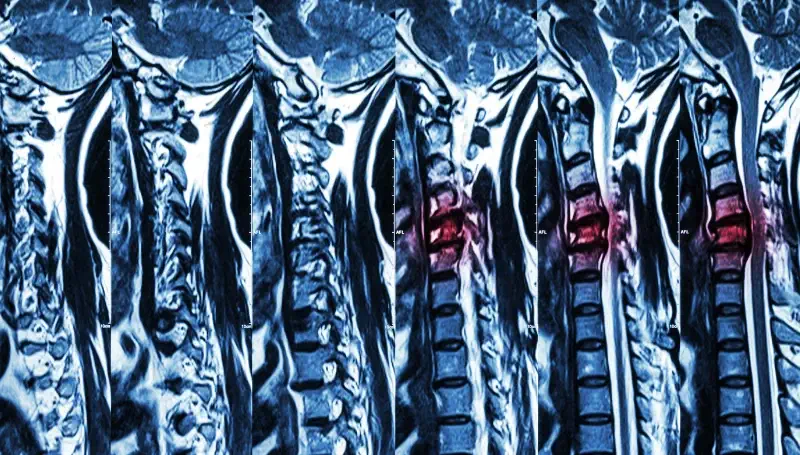
Basically it’s age-related wear and tear in the bones, discs and joints of your neck. Way more common than people think, honestly. Once you’re past 60, most people have some degree of it showing up on a scan, whether or not they feel a thing.
Your discs lose height and flexibility over the years. In response, the body starts growing small bone spurs, osteophytes, around the joints. Add it all up and you get stiffness, a reduced range of motion, and sometimes some irritation or compression of the nerves nearby.
It doesn’t happen overnight, which is honestly the whole point of catching it early. A fair number of patients end up needing cervical spondylosis C5 C6 treatment specifically, since C5-C6 tends to take the brunt of the wear.
>> Seek Early Care if You Neck Stiffness and Persistent Pain – Book Appointment
Can Physiotherapy Cure Cervical Spondylosis?
The honest answer is no, physiotherapy for cervical spondylosis won’t reverse what’s already degenerated. It’s not putting a worn disc back into its original shape. It’s not removing a bone spur that’s already formed. So, if someone is telling you it can cure cervical spondylosis permanently, that’s not quite true.
Here’s where it does earn its keep, though. Getting physiotherapy for cervical spondylosis means less pain, a neck that actually moves again, stronger, more resilient muscles supporting it. It also fixes the posture habits that were making everything worse in the first place. You get through your day, work, driving, sleeping, without that constant background ache.
What it can’t promise is that surgery’s off the table forever, or that it’ll single-handedly fix a serious nerve compression.
Honestly “management” fits better than “cure” here. Physiotherapy isn’t trying to make your spine look structurally normal on a scan. It’s trying to get you moving better and hurting less, functioning like yourself again.
| What physiotherapy can do | What it cannot do |
|---|---|
| Reduce pain | Reverse age-related degeneration |
| Improve neck mobility | Restore a damaged disc to its original state |
| Improve muscle strength/endurance | Remove structural bone changes |
| Correct contributing posture/movement patterns | Guarantee that surgery will never be required |
| Improve daily function | Cure severe neurological compression by itself |
If you want a broader picture of what specialist spine care looks like, as the best hospital in Gaya, we bring orthopedic and physiotherapy care together in one place. Every patient gets a customized treatment plan that treats the root causes to fix your neck pain issues.
It might sound like a small distinction, but it isn’t, not once you’re the one setting expectations for your own recovery.
How Does Physiotherapy Help Cervical Spondylosis?

There isn’t one single fix. It’s more like a handful of approaches layered on top of each other, mobility, posture, pain, each pulling its own weight.
Here’s roughly how it comes together in practice.
1. Therapeutic Exercises
Cervical spondylosis exercises usually cover gentle range-of-motion work, deep neck flexor strengthening, and some shoulder and upper-back training thrown in for good measure.
Flexibility work rounds it off. A physiotherapist worth their salt builds this around your actual symptoms, not some list they pulled off a random website.
Where you start depends entirely on how irritable your symptoms are on the day of assessment. Mild stiffness? You can probably jump into active movement pretty quickly.
Something more acute? You’ll likely start slower, more supported. Either way the shape of it tends to be similar, pain relief first, then building the strength and endurance so your neck can handle regular daily life without the constant pain flare ups.
2. Posture Correction
After years of hunching in front of laptops, staring at mobile phones, and sleeping without proper support for the neck, the strain on the neck’s spinal bones accumulates slowly and silently. One way to solve the problem is through ergonomics: how you sit, where your computer monitor is located, what angle you hold your cell phone at – these factors are nearly half as important as the workouts themselves.
In fact, tiny, consistent lifestyle changes are a better alternative to an occasional big-life change. Set up a screen at your eye level. Every hour or so, make sure to get up and stretch/refresh yourself. Sleep with a pillow that is suitable for your neck and does not push or lift your head up.
3. Manual Therapy
When a physiotherapist feels that mobilization or soft-tissue work is necessary, they will utilize them to help alleviate the tension and lessen the strain. Though it’s not an option for everyone. Such manipulations are not a good idea, once there’s numbness or weakness that is due to a nerve being pinched or crushed.
These treatments are not meant to be the solution alone; they work most effectively when they are supported by doing the active exercises the client is able to take part in.
Initially the therapist will assess joint mobility, whether the surrounding muscles are tight, and which treatment to give. Gentle joint movement is appropriate if the area is very stiff and soft-tissue release helps deal with muscle problems in the neck or shoulder area.
4. Heat, Electrotherapy, and Other Modalities
Heat and electrotherapy sometimes get folded in alongside the active rehab. They’re the supporting cast here, not the headline act, and nobody should be selling them to you as the cure itself.
If you want more detail on how these get used in practice, the best physiotherapy doctor in Gaya can help you get a customized treatment plan.
Heat loosens up tight muscles before a session, so stretching doesn’t feel like a fight against your own body. Electrotherapy, TENS being the common one, can dull the pain during a flare-up.
Neither one is doing the actual strengthening or postural work that fixes anything long term, they simply make it more comfortable to do that work consistently.
✔ Get a Cervical Spondylosis Treatment Plan Suited to Your Symptoms

What Exercises are Commonly Used for Cervical Spondylosis?
The usual choices include: chin tucks for the deep neck flexors, gentle range-of-motion movement, scapular retraction, some upper-back strengthening, shoulder mobility, postural drills. None of it’s supposed to feel intense.
You’re not going to find a “10 exercises to cure cervical spondylosis” list here, that kind of framing just sets people up to be disappointed later.
One thing actually worth remembering: stop or scale back anything that makes your pain worse, or brings on numbness, weakness, dizziness, any neurological symptom at all. Treat that as a sign you need reassessing, not a sign to grit your teeth and push through.
What order and combination actually works for you comes down to your own assessment, not some standard checklist everyone follows. Some people start with isometric holds and work up to active movement from there. Others need to build scapular control first, before the neck-specific work even starts.
Get it wrong, jump into something too soon or with bad form, and you can end up worse off. That’s really why doing this under supervision, at least at the start, tends to go better and safer than working it out alone.
>> Consult Samar Nausheen – Book Physiotherapy Care at Dr. A Barkat Multispeciality Hospital.
How Long Does Physiotherapy Take to Help Cervical Spondylosis?
Cervical physiotherapy’s time frame and results depend on many personal factors. A time period of cure in 4 weeks is an exaggeration.
The rate at which a therapy takes effect primarily depends on such factors as the seriousness of damage, the duration of the symptoms, the presence or absence of nerve problems, age and condition of overall health, how consistently you actually show up for the exercises, and also the person’s ergonomic habits outside the physical therapy clinic room.
Some people notice real change, less pain, more movement, within a few weeks. Others, particularly with chronic symptoms or nerve involvement, are looking at a longer stretch of rehab, sometimes months.
Pain relievers or muscle relaxants get used alongside therapy sometimes too, but there’s no universal best medicine for cervical spondylosis since it really comes down to what your specific symptoms call for.
👉 ALSO READ: Can Physical Therapy Cure Spinal Stenosis?
Is Physiotherapy Enough for Cervical Spondylosis?
Yes, plenty of people who have mild symptoms find that physical therapy alone is sufficient.
However, there can be situations when you need to also have an orthopedic consultation.
Look for some warning signs along with pain:
- the pain is continuous and getting worse,
- you experience arm pain that spreads,
- tingling, numbness, and weakness,
- coordination is getting worse,
- and you feel really limited when you move your neck, or the symptoms have come up due to an injury.
If that sounds like your situation, physiotherapy shouldn’t be the only thing on your plate. Nerve compressions, which are left untreated, can be a serious problem. Therefore, it’s best to have a professional look at it; it won’t help to hope that it gets fixed by itself.
It doesn’t imply that physiotherapy is a no-go at this stage once nerve symptoms are identified. Just that physio needs to have a medical check-up to support it.
An orthopedic specialist will be able to order imaging or nerve studies to actually show you what is going on, and then will be able to decide if your physiotherapy plan needs to be revised or stepped up, or even if you are to get additional treatments.
If you completely focus on the exercise regime in spite of the above symptoms, even something quite manageable could have a quiet way of becoming a bigger problem before you even notice any change.
When Does Cervical Spondylosis Need an Orthopedic Consultation?

If cervical spondylosis is causing pain that won’t quit, arm symptoms, or any neurological changes, the best orthopedic specialist in Gaya can help figure out whether physiotherapy alone gets the job done or whether you need more imaging and treatments.
An orthopedic specialist looks at the whole situation, starting with the proper diagnosis, and assesses if conservative management including physiotherapy is better. And suggests surgery only if it genuinely comes to that.
This isn’t about rushing anyone toward an operating table. It’s about making sure whatever plan you’re on actually fits what’s happening in your neck.
A physical examination and a thorough medical history will most probably be the first steps of your consultation. You may then get some imaging done in case your symptoms indicate nerve damage or structural changes that you might better get looked at closely.
The specialist will tell you then whether your physiotherapy is effective, needs adjustments, or, as a matter of fact, something more should be done as an additional treatment. Get this sorted early, rather than spend months guessing, and you generally keep more options open.
Physiotherapy vs Surgery for Cervical Spondylosis
It’s not really either-or. The typical path goes conservative treatment first, then monitoring, then escalation to surgery only if it turns out to actually be necessary.
Surgery comes into play when there’s significant nerve or spinal cord compression, ongoing neurological decline, spinal instability, or symptoms that just won’t budge despite proper conservative care. An integrated approach, orthopedic specialist and physiotherapist working as a team, generally gives you the best odds of avoiding surgery altogether while still catching anything serious early if it does come up.
That’s why at Dr. A Barkat Multispeciality Hospital, we treat cervical spondylosis cases with an integrated approach, providing both ortho and physio consultations under one roof.
>> Visit Dr. A Barkat Multispeciality Hospital in Gaya
Can Cervical Spondylosis be Prevented from Getting Worse?
You can’t stop aging. You can absolutely slow down how much it messes with your daily life. Staying active, keeping your neck and shoulder muscles strong, paying attention to how your desk is set up, not sitting frozen in one position for hours, keeping your weight in a healthy range, it all adds up.
Sticking to your exercise programme and getting persistent symptoms looked at early instead of brushing them off also makes a real difference. None of it stops the underlying degeneration entirely, though, it just helps you manage the effects better.
Consistency beats intensity, every time. A short set of neck and shoulder exercises done daily protects you more than an occasional hard session followed by weeks of doing nothing.
Small habits pile up too: getting up and moving hourly, not cradling your phone between ear and shoulder, straightening up the second you catch yourself slouching. None of it reverses existing damage. It does keep things from sliding from mild into severe.
When Should You See a Doctor for Neck Pain?
Some symptoms genuinely mean don’t wait around. Get checked promptly if you notice:
- Numbness or tingling in your arm or hand
- Muscle weakness
- Trouble walking or keeping your balance
- Loss of hand coordination
- Pain that’s severe or getting worse fast
- Symptoms that started after a significant injury
- Bladder or bowel changes alongside spinal symptoms
These red flags exist for a reason, not just to scare you. Catch things early and you tend to keep more treatment options open, plus an easier recovery.
If any of this sounds familiar, a proper neck pain treatment in Gaya plan built around an actual diagnosis, not a guess, puts you in a far better spot than sitting around waiting to see if the pain settles.
FAQs
Following are some of the questions most commonly asked by patients of cervical spondylosis contemplating their treatment options. We’ve compiled a few of the queries for you.
1. What is the best physiotherapy for cervical spondylosis?
There isn’t a single “best” one, it’s usually a mix: gentle mobility work, deep neck flexor strengthening, and posture correction, tailored around your symptoms specifically.
2. Which is the best treatment for cervical spondylosis?
Most people start with conservative care, physiotherapy, posture correction, medication if it’s needed. If symptoms stick around or get worse, that’s when an orthopedic evaluation comes in.
3. How to stop cervical spondylosis from getting worse?
Stay active. Keep your neck and shoulder muscles strong. Fix the posture habits doing the damage. And don’t ignore symptoms that stick around, get them checked.
4. What is the root cause of cervical spondylosis?
Age-related wear and tear on the discs, joints and bones of your cervical spine, that’s really it at the core.
5. Which doctor should I see for cervical spondylosis?
An orthopedic specialist is your best starting point, often working alongside a physiotherapist for the actual management side.
6. Can I live a normal life with cervical spondylosis?
For most people, yes. Get the mix right, physiotherapy, posture habits, medical treatment where it’s needed, and daily life stays pretty normal.
7. What to avoid if you have cervical spondylosis?
Long stretches in one static neck position, sloppy posture on your phone or laptop, and pushing through any exercise that triggers pain or numbness.
8. Can cervical spondylosis be cured permanently with physiotherapy?
Not permanently, no. It manages symptoms well and improves function, but the degenerative changes themselves stay put.
9. Is physiotherapy good for cervical spondylosis?
It’s genuinely one of the better treatments available. It reduces pain, improves movement, and keeps things from sliding downhill and getting worse.
10. How many physiotherapy sessions are needed for cervical spondylosis?
Depends entirely on the case. Some people need a few weeks of regular sessions, others need something more long-term.
11. Can cervical spondylosis be treated without surgery?
In most cases, yes. Physiotherapy, posture correction, and medication handle the majority of cases without surgery ever becoming necessary.
12. Can physiotherapy prevent cervical spondylosis from getting worse?
It can slow things down and keep function intact, but it won’t stop the underlying age-related changes from happening.
13. Can I exercise if I have cervical spondylosis?
You can just stick to exercises suited to your specific condition, and stop the moment something triggers pain, numbness, or weakness.
14. When should I stop physiotherapy for cervical spondylosis?
That’s really a call your physiotherapist or orthopedic specialist should make with you, based on how you’re progressing and how well symptoms are under control.
Seek Early Care to Manage Pain
So, can cervical spondylosis be cured? Not really. What it can be is managed well, and that’s worth quite a lot on its own. Physiotherapy remains one of the more effective, evidence-based ways to cut pain and get function back, even without touching the degeneration underneath it. But if your symptoms include arm pain, numbness, or weakness, don’t just sit on it and hope.
Getting diagnosed early keeps more options open for you, and it’s usually the difference between something manageable staying manageable versus turning into something chronic.
Whether you end up needing physiotherapy alone or a combined approach with orthopedic care, starting sooner rather than later is what actually shapes your long-term outcome.
Consult Dr. A. Ghufran today for a proper diagnosis and a treatment plan built around what you actually need. Book Appointment with our orthopedic and physiotherapy team at Dr. A Barkat Multispeciality Hospital, Gaya.





Leave a Reply