
Endometriosis and PCOS are two separate conditions. They just don’t always look separate. Painful periods, irregular cycles, pelvic pain, fertility trouble – either one can bring all of it, and that’s the whole reason women confuse them so often.
Endometriosis is tissue similar to the uterine lining, growing where it shouldn’t. Whereas, PCOS treatment in Gaya deals with something else entirely: a hormonal disorder that disrupts ovulation. One thing worth holding onto before you read further – your symptoms alone won’t tell you which one you have. A proper evaluation will.
Dr. Sania Akhtar diagnoses and helps manage these conditions. If you have symptoms, sorting out the underlying issue with the help of a specialist early beats months of guessing.
Endometriosis vs PCOS: What’s the Difference?
A quick side-by-side before the details:
| Factor | Endometriosis | PCOS |
| What it affects | Tissue similar to uterine lining growing outside the uterus | Hormonal and ovulatory function |
| Periods | Often painful; may also be heavy | Often irregular or infrequent |
| Pelvic pain | Common | Not usually the defining symptom |
| Ovulation | Can be affected indirectly | Frequently irregular |
| Fertility | Can affect fertility | Can affect fertility |
| Hormonal features | Not primarily a hormone disorder | Hormonal imbalance is central |
| Diagnosis | Medical evaluation, imaging and sometimes laparoscopy | Medical history, examination, blood tests and/or ultrasound |
Nobody fits this table perfectly. Some women carry endometriosis for years before a specialist diagnoses and names it. Some have PCOS without acne or hair-growth symptoms people expect.
If irregular periods are what got you searching, our irregular periods treatment in Gaya page digs into that separately.
What Is Endometriosis?
Endometriosis is tissue similar to the uterine lining growing outside the uterus – the ovaries, the fallopian tubes, sometimes the pelvic lining itself. It still responds to your hormones every month, thickening and breaking down with nowhere to actually go. That’s the inflammation behind endometriosis pain.
Painful periods are the most common complaint, along with chronic pelvic pain and pain during intercourse. Symptoms tend to spike around your period and settle after. Because endometriosis in women rarely presents the same way, endometriosis diagnosis usually needs imaging, and sometimes laparoscopy to actually confirm it.
What Is PCOS?
PCOS starts with hormones, not periods. Irregular ovulation is the root of it – your ovaries don’t release an egg on a predictable schedule, so the whole cycle drifts. Sometimes that means periods arrive late. Sometimes they barely show up.
Androgens are the other half of the picture: acne, extra hair on the face or body, thinning hair at the scalp. Getting pregnant can be harder for some women too.
And PCOS rarely stops at reproduction – insulin resistance and weight shifts tend to show up alongside it, which is part of why it’s treated as a whole-body condition, not just a gynecological one.
>> Seek Timely Consultation for the Correct Diagnoses

Endometriosis vs PCOS Symptoms: What Overlaps?
Here’s where most people get stuck. On paper, the two conditions can look nearly identical. Underneath, they’re nothing alike. Here are some overlapping symptoms you can notice:
1. Irregular or Abnormal Menstrual Patterns
Both disrupt your cycle, just differently. PCOS causes it through irregular ovulation. Endometriosis does it through inflammation combined with hormonal shifts.
2. Fertility Difficulties
Conceiving gets harder with either one. PCOS mostly affects fertility through ovulation problems, endometriosis can physically interfere with reproductive organs.
3. Fatigue or Discomfort
Chronic pain wears a person down. So does hormone shifts that won’t settle. Either way, the fatigue and pelvic discomfort often show up without an obvious cause.
4. Changes in Menstrual Bleeding
Heavier one month, lighter the next, unpredictable in between. Both conditions can do this, but rarely for the same underlying reason.
The overlap isn’t a coincidence. Both conditions disturb the reproductive system, they just take completely different biological pathways.
How Are Endometriosis and PCOS Symptoms Different?
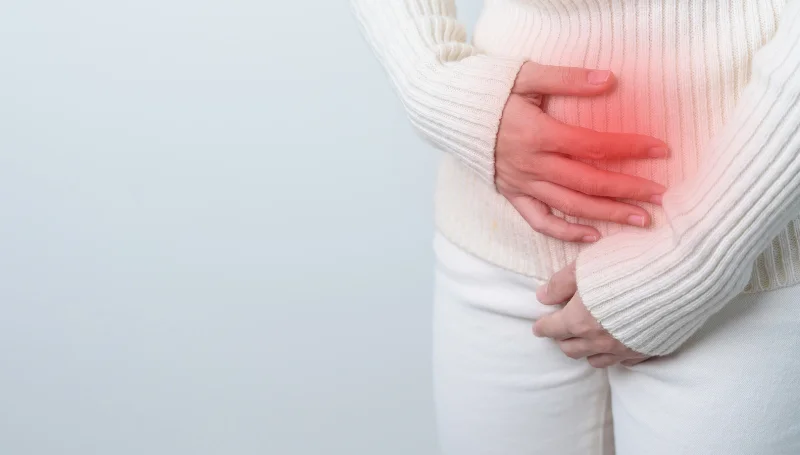
Look past the overlap and the differences get sharper. Endometriosis tends to bring real pain – pelvic pain, period pain, flares around menstruation, pain during sex. Some women also notice bowel or bladder discomfort tied specifically to their cycle.
PCOS usually reads differently. Periods that are irregular or infrequent. Ovulation with no discernible pattern. Pain isn’t typically the main complaint – acne, extra body and facial hair growth, and scalp thinning are what tend to show up instead. Conceiving can be difficult either way, but for entirely different reasons underneath.
None of this is a fixed rulebook, though. Symptoms may overlap, or land somewhere that doesn’t fit either category cleanly, which is exactly why an actual evaluation beats matching your symptoms to a checklist.
Talk to Dr. Sania Akhtar if nothing about your symptoms lines up neatly. Getting ahead of it now makes everything easier down the line.
>> Book a Gynecology Appointment Today!
Endometriosis vs PCOS: Which One Causes Infertility?
Both can affect fertility, but through very different mechanisms. In PCOS, it’s usually ovulation – no egg released on time means no reliable fertile window and no easy way to time conception. This is often the first fertility concern doctors investigate in women with PCOS.
Endometriosis works differently. The tissue growth, and the inflammation that comes with it, can distort pelvic anatomy, affect the fallopian tubes, and in some cases affect egg quality.
But here’s what matters most: struggling to conceive doesn’t automatically mean you have either condition. Infertility has a long list of possible causes, and testing, not assumption, is what narrows it down. Our infertility treatment in Gaya page covers what that testing typically looks like.
Can You Have PCOS and Endometriosis Together?
Yes. Having symptoms that point toward one condition doesn’t rule out the other. A woman with irregular ovulation from PCOS can, entirely separately, also develop endometrial-like tissue growth.
That’s precisely why guessing from symptoms alone falls apart here. Pelvic pain, irregular cycles, fertility struggles – all of it shows up across both conditions and several others besides.
Self-diagnosis just isn’t built for that kind of overlap. Testing is what actually tells you whether you’re dealing with one condition, both, or something else entirely.
How Are PCOS and Endometriosis Diagnosed?
The path to diagnosis looks quite different for each, since the two conditions affect the body in fundamentally different ways.
PCOS Evaluation
It usually starts with your menstrual history and a conversation about symptoms – acne, hair growth, the usual list. A physical exam follows, then blood tests to check hormone levels. An ultrasound gets added when it’s needed.
Endometriosis Evaluation
This tends to start with your symptom history, especially how it tracks against your cycle. A pelvic exam may come next, along with imaging. Sometimes it takes further evaluation, laparoscopy included, before a diagnosis is confirmed.
No single symptom seals the case for either condition. If you’re searching for the best gynecologist in Gaya to guide you through whichever path applies, our gynecology department handles both under one roof.
Endometriosis vs PCOS Treatment: How Does Management Differ?
Once diagnosis is confirmed, treatment splits pretty sharply – the two conditions have different origins, so the fixes look different too.
PCOS Management May Involve:
Regulating the cycle is usually the starting point, sometimes alongside lifestyle changes where they’re relevant. Androgen symptoms – acne, excess hair are often handled as their own issue. Fertility-focused care comes in when pregnancy is the goal.
Endometriosis Management May Involve:
Pain management typically comes first, often paired with hormonal treatment to slow down the tissue activity. Surgery gets considered in select cases, usually when symptoms are severe or other options haven’t worked. Fertility care is added here too, exactly as it is for PCOS, when it’s needed.
There’s no generic version of this. What treatment plan you get depends on your symptoms, what you want for your reproductive future, and what the clinical findings actually show. The best gynecologist doctor in Gaya, Dr. Sania Akhtar, builds each plan around the patient in front of her, rather than a generic protocol.
When Should You See a Gynecologist?
Some signs shouldn’t be ignored:
- Persistent or severe period pain,
- very irregular periods,
- and unusually heavy bleeding
- Pelvic pain bad enough that it gets in the way of your day.
Trouble conceiving belongs on that list too – and so does any menstrual symptom that’s new or getting worse.
Waiting for a consultation usually just makes both diagnosis and treatment harder down the line. It’s important to know when should you see a gynecologist to get the required care at the right time.
Endometriosis vs PCOS: Quick Comparison
| Endometriosis | PCOS | |
| Main issue | Endometrial-like tissue outside uterus | Hormonal/ovulatory dysfunction |
| Common concern | Pelvic/period pain | Irregular ovulation/periods |
| Fertility | Can be affected | Can be affected |
| Diagnosis | Clinical evaluation + investigations | Clinical evaluation + investigations |
FAQs
1. Is PCOS the same as endometriosis?
No, they are separate conditions, but a few symptoms can overlap.
2. Which is more painful, endometriosis or PCOS?
Endometriosis tends to bring more pelvic and period pain.
3. Can you have PCOS and endometriosis together?
Yes, they can both show up in the same person at the same time.
4. Can both PCOS and endometriosis affect fertility?
Yes, though through different mechanisms. Ovulation problems in PCOS versus tissue-related changes in endometriosis.
5. Can an ultrasound diagnose PCOS or endometriosis?
Ultrasound can support diagnosis for both, but it isn’t always sufficient on its own, especially for endometriosis.
6. Should I see a gynecologist for painful or irregular periods?
Yes, persistent pain or irregular cycles deserve a proper medical evaluation rather than guesswork.
Seek Early Care for Unexplained Symptoms
PCOS and endometriosis aren’t the same thing, even when PCOS and endometriosis symptoms overlap enough to confuse anyone.
If you’re trying to pin down the endometriosis and PCOS difference, wondering if I have PCOS or endometriosis, or trying to understand endometriosis vs PCOS fertility concerns, none of that comes from a symptom list. And honestly, PCOS vs endometriosis which is worse isn’t a question with a fair answer. It depends on what’s actually happening in your body.
Persistent menstrual changes, pelvic pain, or fertility concerns deserve a real look, not a guess. Whether it turns out to be endometriosis or PCOS, or PCOS and endometriosis together, the answer starts with seeing the right specialist.
Book an appointment with our gynecology department to get some clarity.
Leave a Reply