
A broken bone rarely announces itself clearly. You could walk on a hairline crack and barely notice an arm injury and write it off as a sprain. That’s the problem with guessing at home instead of getting it checked.
Falls, road accidents, sports injuries, bones gone brittle from osteoporosis – these are the usual culprits, and what you actually need depends on where the break sits, how bad it is, and whether the bone’s shifted.
Put off getting checked and you might not get full mobility back. So, if fracture treatment in Gaya is what brought you here, it helps to know roughly what you’re walking into.
A small crack might require you to undergo bone fracture treatment in Gaya or you might need a more involved broken bone treatment in Gaya after a serious accident. Either way, early care matters more than people think.
Fracture Treatment in Gaya: What Does Treatment Involve?

Treatment for a fracture is never one-size-fits-all. A few steps, roughly, though your specific injury decides the order and importance of each.
- Initial assessment first including examining swelling, movement, pain levels.
- Then imaging and diagnosis, almost always an X-ray, to see exactly what you’re dealing with.
- From there immobilization with a splint or cast if the break’s minor, or reduction if the bone needs realigning.
- Worse breaks get surgical fixation, plates or screws or rods holding the bone in place while it heals.
- And once the acute stage passes, follow-up and rehabilitation starts, rebuilding what the injury took and to track healing progress.
Dr. A. Ghufran leads fracture care at Dr. A Barkat Multispeciality Hospital and is regarded as the best orthopedic doctor in Gaya. Every treatment plan he creates is customized around the actual bone and injury, not a template copy for all cases.
Patients know him as an experienced orthopedic doctor for fracture cases and a trusted fracture doctor in Gaya, and he stays involved from that first exam through to the last day of rehab.
Two people with “the same” fracture can heal on completely different timelines. That’s really why blanket advice falls apart here. So, what actually are the different types of fractures you might actually be dealing with.

Different Types of Fractures Treated at the Hospital
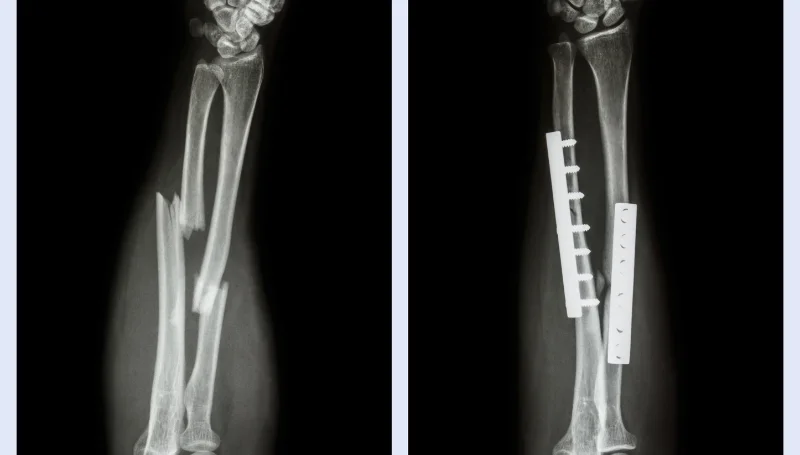
Same word, “fracture,” but wildly different injuries hide underneath it. What kind you have decides what happens next. In fact, not every broken bone looks or behaves the same way, and the type of bone injury directly shapes the treatment path.
Closed Fracture
Skin intact, bone broken underneath – that’s a closed fracture. Swelling and bruising can be there, sure, but no open wound. Immobilization is done for most of these cases. The messier more complex cases might still need surgical fixation to hold alignment.
Open Fracture
An open fracture breaks through the skin, or the injury tears a wound open right near the fracture site. This one shouldn’t be waited out for treatment. Infection risk and blood loss push it straight into emergency territory almost every time.
Displaced vs Non-Displaced Fracture
Sometimes the bone stays aligned despite the crack. That’s a non-displaced fracture. But when the bone shifted out of position, that’s a displaced fracture – what doctors call bone displacement, and it usually needs realigning, sometimes surgically, before healing can even begin.
Hairline or Stress Fracture
Hairline fractures sneak up on you. Repetitive stress, not one dramatic moment, and symptoms mild enough that people ignore them for weeks until the pain refuses to quit.
Once you know which bucket your injury falls into, the differences in treatment plans start making sense. Which raises the obvious next question – what actually causes these in the first place?
What Causes Bone Fractures?
Two broad reasons: some sudden trauma, or bone that’s been quietly weakening for years.
Road accidents cause a disproportionate share of the severe ones – high-impact force does real damage.
Falls hit older adults hardest, usually landing on the hip, wrist, or ankle. Sports injuries come from collisions, bad twists, awkward landings. And then the slower risks: a direct blow, a joint twisted the wrong way, or osteoporosis thinning bone density year after year without anyone noticing.
If your injury happened during physical activity, our guide to best sports injury treatment covers related injuries in more depth.
The cause matters more than people assume – it tells your doctor whether there’s something deeper going on with your bone health. A qualified fracture specialist in Gaya can flag whether repeated injuries mean you need broader bone injury treatment, not just a fix for this one break. Next: how do you actually know it’s a fracture?
Signs and Symptoms of a Fracture
Some fractures scream. Others whisper. It depends entirely on severity and where it happened.
Fracture pain, sharp and persistent, is usually the first tell, which is usually worse with movement or pressure. Fracture swelling and bruising show up within hours, tenderness settling in right at the site.
Maybe you can’t move the limb properly. Maybe you can’t put weight on it at all. The serious cases show it outright – a visible deformity, the limb bent wrong, or an open wound.
Truth is, symptoms alone won’t always tell you. A mild fracture can feel almost identical to a bad sprain. That gap is exactly why imaging exists.
>> Seek Early Care to Avoid Complications – Book Orthopedic Consultation
How Are Fractures Diagnosed?
Physical exam first, imaging right after.
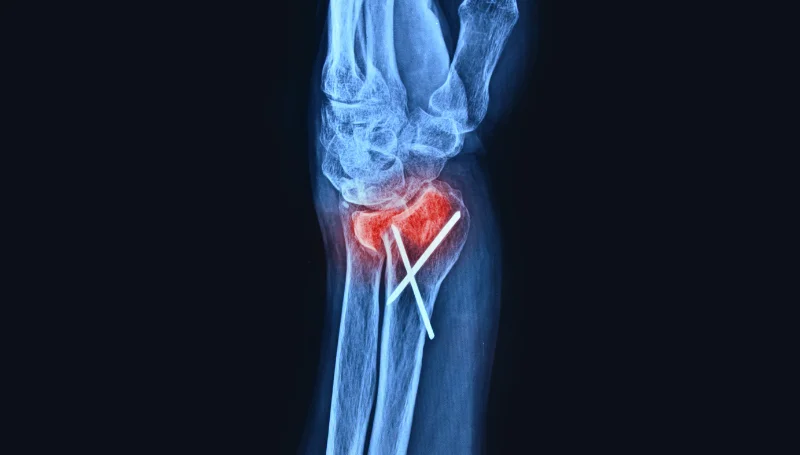
Your doctor checks the area – swelling, deformity, how far it moves. An X-ray for fracture confirmation is step one and catches most breaks.
Complicated cases get a CT scan for a fuller, three-dimensional picture. MRI is reserved for select cases, mostly when soft tissue or a subtle fracture needs a closer look.
Imaging is what actually pins down the location and type, and that’s what the treatment plan gets built on. Consult a doctor if you think something’s broken; getting the diagnosis right is half the battle toward healing properly.
How are Fractures Treated?
Severity, location, alignment – those three things decide everything here.
Immobilization
For a lot of fractures – closed, non-displaced – fracture immobilization alone gets the job done. A splint right after injury for quick stabilization.
A cast once swelling drops, usually intended for longer-term support. Braces, sometimes, when a bit of flexibility is needed during recovery. The point is simple: hold the bone still, protect it from further movement, and let new bone tissue form.
Fracture Reduction
Shifted bone needs realignment before it can heal right. That’s reduction – sometimes done manually under anesthesia, sometimes requiring a fuller surgical approach depending on how far the bone has moved.
Surgical Fracture Fixation
Severely displaced. Unstable. Anything touching a joint. These need surgical fracture fixation to get back into proper alignment.
Surgeons may use plates, screws, rods, nails, as forms of internal fixation, holding the bone steady while it heals. This doesn’t mean every fracture ends up needing surgery, though.
Most heal fine with immobilization alone. Surgery only enters the conversation when it’s genuinely necessary.
For fractures involving joint injuries, our best arthroscopy specialist in Gaya explains minimally invasive options for related joint conditions.
Book Appointment with Dr. A. Ghufran and find out which path actually fits your fracture, which brings up the next question worth asking: when does this actually require surgery?
When Does a Fracture Need Surgery?
Surgery is not the default option. But a handful of situations tip the scale toward it.
- Bone that’s moved significantly out of place usually can’t be fixed any other way.
- Fractures that stay unstable even after realignment need fixation to hold.
- Some open fractures need surgical cleaning and stabilization purely because of infection risk.
- Joint involvement raises the stakes for long-term function if alignment’s off.
- If non-surgical treatment simply can’t hold the bone in place, surgery becomes the only real option left.
Bottom line – a proper orthopedic assessment is what tells you whether you’re looking at fracture surgery in Gaya or something more conservative will be enough.
Fracture Recovery and Rehabilitation
Bone healing takes its time. Rush it and you’ll likely pay for that later.
Fracture recovery timelines swing wildly – depending on which bone, how bad the break was, your age, your general health, which treatment path you took.
Follow-up imaging usually confirms whether healing’s on track. Once immobilization ends, or surgery is behind you, fracture rehabilitation takes over, rebuilding movement, strength, and function bit by bit.
Physiotherapy after fracture treatment, alongside general mobility work, tends to anchor this whole stretch. This piece on physical therapy and knee health offers useful context on how rehabilitation supports long-term joint function.
Also, the cast coming off isn’t really the finish line. And knowing when things tip into an emergency territory can matter just as much as the treatment itself.
When Should You Seek Emergency Care for a Fracture?
Certain situations don’t wait for a scheduled visit.
- Get to emergency care fast if there’s an open wound near a suspected fracture, a visible deformity, or serious bleeding.
- Pain that rest won’t be able to subside. Numbness or loss of sensation in the affected limb. Skin extremity gone pale, blue, or oddly cold – all signs indicate blood flow or nerve function might be compromised.
- A fracture after a major accident, or simply not being able to move or bear weight – don’t wait on either.
For urgent cases, we are the best emergency hospital in Gaya providing round-the-clock trauma care that works closely with our orthopedic team.
Spotting these signs early genuinely changes outcomes. But there’s also a right and wrong way to act before you even get to the hospital.
>> Visit Dr. A Barkat Multispeciality Hospital for Emergency Care
What Should You Do Before Reaching the Hospital?
Those first few minutes matter more than people realize.
- Keep the injured area still – as still as you possibly can manage.
- Resist the urge to straighten a visibly deformed limb yourself.
- If there’s bleeding, press gently around the wound, never directly on the exposed bone.
- After serious trauma, limit how much the person moves, and get them evaluated as fast as you’re able to.
What Not to Do:
- Don’t try to “pop” a joint or bone back into place
- Don’t apply ice directly to broken skin
- Don’t give the person food or water if surgery might be needed
- Don’t delay care because the pain seems manageable
Avoid these mistakes and get to the hospital safely, and the orthopedic surgeon will examine you and suggest the best treatment plan.
Frequently Asked Questions
Following are some of the most commonly asked questions about fracture treatment and complications.
1. Who treats fractures?
Orthopedic doctors, like Dr. A. Ghufran, diagnose and treat fractures.
2. How do you treat a swollen fracture?
Swelling is managed with elevation, rest, and immobilization alongside fracture treatment.
3. What is the management of fractures?
Management includes assessment, imaging, immobilization or reduction, and rehabilitation.
4. Can a fractured bone fully heal?
Yes, most fractures heal fully with proper treatment and rehabilitation.
5. What are the 7 signs of a fracture?
Pain, swelling, bruising, tenderness, limited movement, deformity, and inability to bear weight.
6. How to heal a fracture faster?
Follow immobilization instructions, attend follow-ups, and complete prescribed rehabilitation.
7. What are the 4 stages of bone fracture?
Hematoma formation, soft callus, hard callus, and bone remodeling.
8. How do I know if I have a fracture?
Persistent pain, swelling, or deformity after injury should be evaluated with an X-ray.
9. Can a fracture heal without surgery?
Yes, many fractures heal with immobilization alone, without surgical intervention.
10. How long does a broken bone take to heal?
Most fractures take six to eight weeks, though this varies by bone and severity.
11. When does a fracture require surgery?
Surgery is typically needed for displaced, unstable, or joint-involving fractures.
12. What should I do immediately after a suspected fracture?
Keep the area still, avoid movement, and seek prompt medical evaluation.
13. Can I walk on a fractured leg?
No, avoid bearing weight on a suspected leg fracture until evaluated.
14. When should I go to the emergency department for a fracture?
Go immediately for open wounds, deformity, severe bleeding, or loss of sensation.
Seek Timely Fracture Care to Avoid Complications
A fracture deserves a proper look before anyone decides what to do about it – type, location, severity, all of it shapes the right approach.
Evaluate it promptly and you give the bone its best shot at healing correctly, while rehabilitation plays an equally important role in restoring full function afterward. Skip rehab and you’re leaving your full potential recovery out of the equation.
If something feels broken, don’t sit on it. Consult Dr. A. Ghufran today for an accurate diagnosis and a treatment plan actually built around your specific injury.
>> Book Appointment | Call: (+91) 9229012038 | Visit: Civil Lines, behind Aziza Plaza, Opposite Bharat Sewa Ashram, Enayat Colony, Gaya, Bihar 823001





Leave a Reply