

Neck pain is now one of the most reported musculoskeletal problems in Gaya. The Global Burden of Disease Study estimates that 2.41 billion people are living with musculoskeletal conditions. Not to mention, neck pain can be one of the top causes of disability globally.
In Gaya, the pattern looks familiar: long desk hours, constant phone use, chairs that offer no real support. A study in the Brazilian Journal of Physical Therapy found that 20.3% of adults aged 20 and above have neck pain.
Neck pain itself usually varies. Some people get a dull ache near the base of the skull. Others cannot turn their head without a sharp catch. Most wait it out, hoping it passes. Sometimes it does. Often it does not, and by the time they get help the problem has had weeks or months to settle in.
Understanding the cause and having access to the right treatment locally plays an integral role.
Neck Pain Treatment in Gaya

Dr. A Barkat Multispeciality Hospital, the best hospital in Gaya, at Civil Lines, Gaya, has both orthopedic and physiotherapy care available. Patients do not need to visit multiple places to get a complete diagnosis and a rehabilitation plan.
The approach here is personalised; your treatment is based on what is actually causing your pain, not a standard checklist applied to everyone.
Dr. A. Ghufran (MBBS, MS Ortho), an orthopedic and spine surgeon, handles the clinical assessment examining your neck, checking nerve function, and ordering imaging where it is needed.
Alongside, the physiotherapist Samar Nausheen takes over the recovery work: building your movement back, correcting the posture habits that are likely adding to the problem, and making sure you do not end up back in the same position in six months.
The hospital’s default stand is to avoid surgery in cases where a conservative approach and physiotherapy prove sufficient. That call is made only when conservative treatment has genuinely failed and the structural damage justifies it.
Catching the problem early before disc changes or nerve irritation become chronic is what makes that possible for most patients.
Needless to say, consulting the right specialist early can prevent long-term complications.
✅ Consult Dr. A. Ghufran Now or Book an Appointment – 📞Call 922-901-2038

Medical Management (Orthopedic) from Dr. A. Ghufran
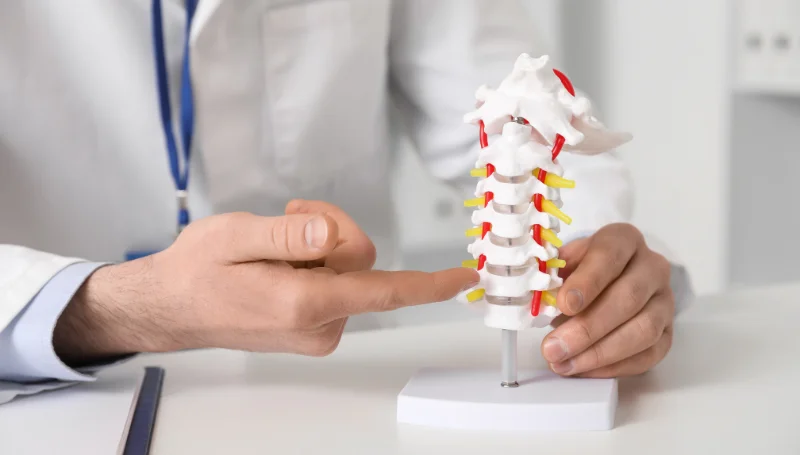
Dr. A. Ghufran starts with a diagnosis not a prescription. The cause matters: muscle strain, cervical spondylosis, a herniated disc, and nerve compression are all different problems that respond to different treatments.
Medicines
NSAIDs like ibuprofen or diclofenac are the common first step, along with muscle relaxants if spasm is a factor. These reduce swelling and manage pain during the early phase so you can actually participate in recovery.
Pain Management
Where oral medicines are not enough, heat therapy, TENS (transcutaneous electrical nerve stimulation), or ultrasound therapy may be used alongside them. These target the local area, reduce acute pain, and improve blood flow to the affected tissue.
Injections (If Needed)
Corticosteroid injections or nerve blocks are used selectively. This is not used as a routine step but when pain is severe enough or nerve involvement is significant enough that other approaches are not cutting through. They are short-term tools, not a solution on their own.
Physiotherapy Care from Samar Nausheen

The physiotherapy expert, Samar Nausheen builds each rehab programme around the individual patient’s condition and history. The physiotherapy services in Gaya at Dr. A Barkat Hospital are not generic.
The goal is to get your neck moving properly again, reduce dependence on pain medication, and address whatever is perpetuating the problem so it does not return.
Exercises
Cervical exercises are introduced gradually. Early sessions focus on gentle range-of-motion movements. As pain allows, isometric exercises and deep cervical flexor strengthening are added.
These small, deep muscles show reduced activation and endurance in people with neck pain and most patients have never been shown how to work them.
Posture Correction
Your physiotherapist looks at how you actually hold your neck during daily activities: sitting in front of a screen, looking at your phone, sleeping.
The corrections are specific to your patterns. This matters especially if your pain is driven by how you sit for 7-8 hours a day at work.
Manual Therapy
Cervical mobilisation and soft tissue work help improve range of motion while reducing neck pain.
Manual therapy has solid research support for non-specific neck pain when paired with exercise. When used alone, the benefits tend not to last in the long run and may provide only short-term relief from pain.
Combined Approach = Best Results
Orthopedic diagnosis with physiotherapy rehabilitation shows better results than either approach alone. A review in Manual Therapy suggests that combining exercise and manual therapy can have greater benefits for short-term neck pain.
Moreover, what you do outside the clinic also matters. Daily habits either support your treatment or work against it.
Lifestyle Changes
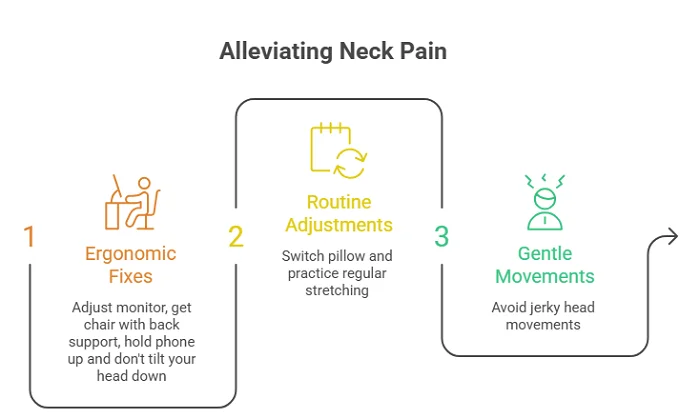
Posture at work accounts for more neck pain than most people want to admit. The awkward part is that even people who ‘know’ to sit up straight rarely manage it after the first hour.
A few ergonomic fixes that actually help:
- Position your monitor at eye level; your chin should stay roughly parallel to the floor.
- Use a chair with real back support; armrests help take load off your neck and shoulders.
- Hold your phone up rather than tilting your head down.
- Get up every 45–60 minutes. A short walk or a few shoulder rolls is enough.
Adjustments worth making to your routine:
- Switch to a backpack instead of a single-shoulder bag when carrying weight.
- Your pillow matters. If it pushes your head forward or lets it drop too far back, you are spending 7-8 hours in a bad position.
- Chin tucks, slow neck rotations, and lateral stretches in the morning take under three minutes and make a real difference over time.
- Avoid jerky head movements when you wake up or change positions quickly; that is when most acute neck ‘catches’ happen.
These habits reinforce what the ortho doctor and physiotherapist will do in terms of a treatment plan.
Early Symptoms You Should Not Ignore

Most people treat neck pain like a cold – wait and see if it passes. And sometimes that works. But there are symptoms that are worth taking seriously sooner rather than later.
Research shows that neck pain addressed within the first 4-6 weeks of onset has a substantially higher recovery rate than pain that has been left untreated for months.
Get a proper evaluation if you have:
- Stiffness that does not ease up after sleep or a rest
- Pain that travels down into your shoulders or arms. This can point to nerve involvement
- Headaches that seem to start at the back of your skull
- Numbness or tingling in your hands or fingers
- Noticeably weaker grip or arm strength
- Pain that gets worse when you tilt your head in a specific direction
Note that self-medication and rest alone are not enough when any of these are present.
Diagnosis of Neck Pain
Neck pain can come from muscle strain, facet joints, intervertebral discs, or compressed nerves. The treatment that works for one of those causes can be unhelpful or wrong for another.
Thus, getting the right diagnosis first is what makes treatment worth doing.
At Dr. A Barkat Multispeciality Hospital, the diagnostic process includes:
- Physical examination – checking range of motion, muscle strength, and neurological signs like reflexes and sensation.
- X-ray – to look at bone alignment, disc space narrowing, and any visible structural changes.
- MRI (if required) – for detailed imaging of the discs, nerve roots, and soft tissue.
- Posture assessment by the physiotherapist – to identify movement patterns that are driving or aggravating the pain.
Treatment is matched to what is actually found, not to the symptom alone.
When Should You See a Doctor?
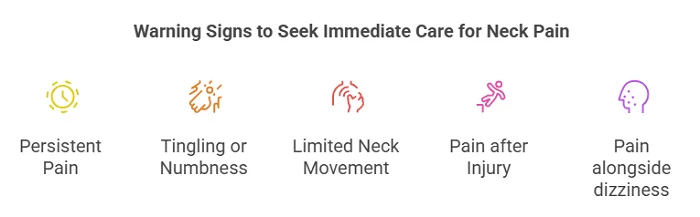
Mild, occasional neck aches from sleeping awkwardly or sitting too long are usually fine to manage with rest for a day or two. But once pain has settled in for more than a week, or once it is affecting how you function, that is worth getting looked at.
The best orthopedic hospital in Gaya, Dr. A Barkat Multispeciality Hospital, has the orthopedic and physiotherapy expertise to assess your situation properly.
Make an appointment if you have:
- Pain persisting for more than one week with no real improvement
- Tingling or numbness in your arms, hands, or fingers
- Limited neck movement that is affecting daily tasks
- Neck pain that started after a fall, collision, or sudden impact
- Neck pain alongside dizziness, trouble swallowing, or vision changes
None of these should be waited out. A timely review with Dr. A. Ghufran or the physiotherapy team can prevent weeks of worsening symptoms.
Frequently Asked Questions
Following are some of the common queries our patients ask about neck pain and how to get rid of it:
1. Can neck pain go away on its own?
Muscle strain often clears in a few days with rest. Pain that runs past a week rarely sorts itself out without some kind of intervention.
2. Is physiotherapy effective for neck pain?
Yes, and the evidence is reasonably solid particularly when physiotherapy is combined with medical management rather than used on its own.
3. How long does neck pain usually take to heal?
Acute cases often improve within 2-4 weeks of proper treatment. Chronic or nerve-related pain typically takes 6-12 weeks of consistent work.
4. Can poor posture cause long-term neck pain?
It can. Sustained poor posture increases load on the cervical discs over time and can eventually lead to structural changes and persistent pain.
5. Is it safe to exercise with neck pain?
Gentle, physiotherapist-prescribed exercises are generally safe. But of course jumping into high-intensity training without guidance is a different matter.
6. When is surgery needed for neck pain?
Surgery is considered when there is significant nerve compression or disc herniation that has not responded to several months of conservative treatment or when there is spinal instability.
Get Relief from Neck Pain Today
Neck pain makes everything harder – sitting, sleeping, concentrating, turning to look before you change lanes. A lot of people put up with it for months before doing anything. By then, it is harder to treat and takes longer to recover.
At Dr. A Barkat Multispeciality Hospital in Gaya, Dr. A. Ghufran and physiotherapist, Samar Nausheen work together on the same patient, so your diagnosis and your rehab are connected, not handled in isolation.
The approach is non-surgical wherever that is possible. And it usually is, if you come in early enough. Book your consultation today to get fast relief.
📍 Dr. A Barkat Multispeciality Hospital at Civil Lines, Behind Aziza Plaza, Opposite Bharat Sewa Ashram, Enayat Colony, Gaya, Bihar 823001
📞 922-901-2038 ✉️ info@drabarkathospital.in 🕐 Available 24 x 7 | Book Appointment Today







Leave a Reply